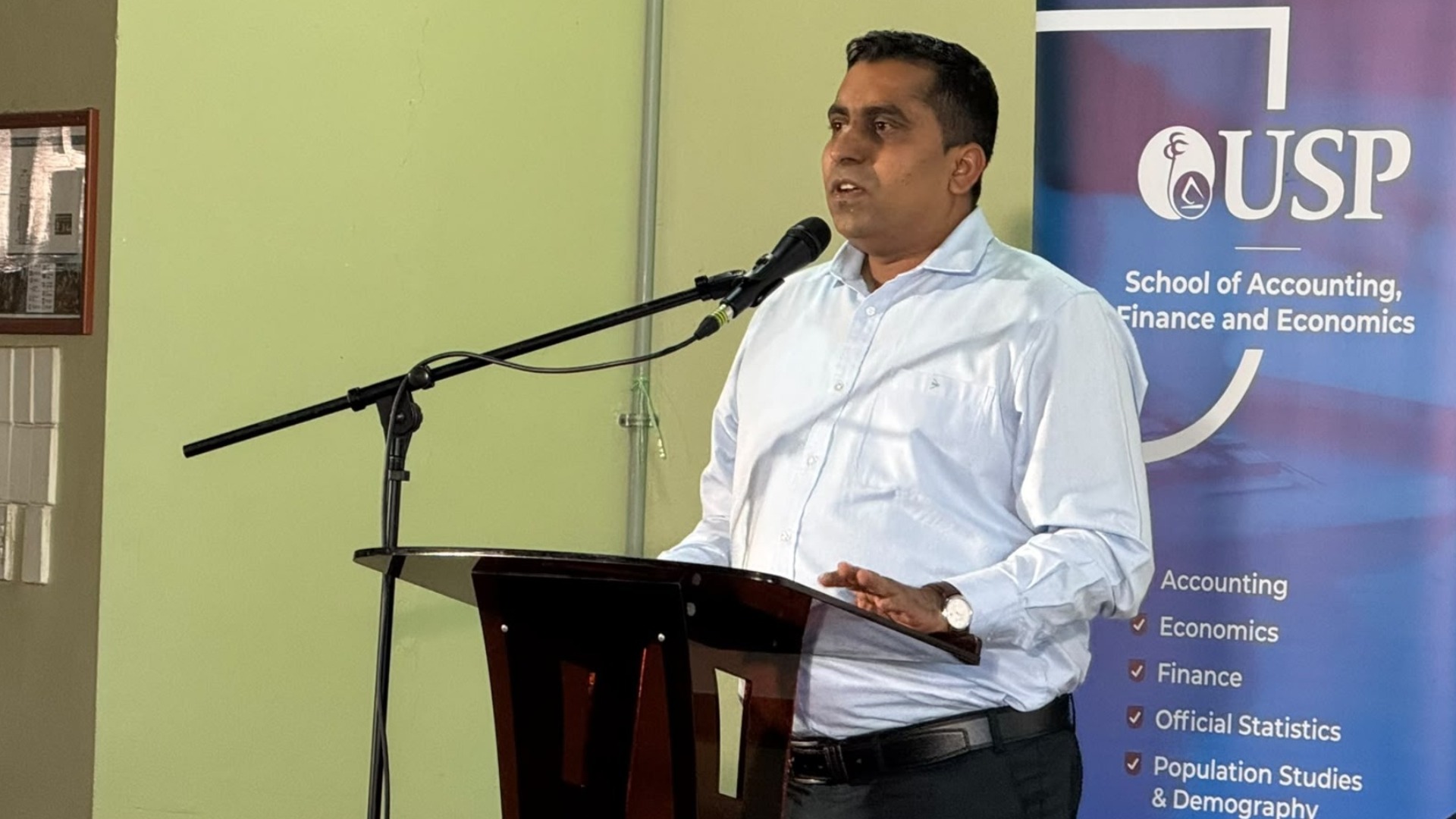
The cost of servicing Government debt has risen significantly, accounting for more than 10 percent of Government expenditure, and Permanent Secretary for Finance, Shiri Goundar warns that Fiji has entered uncharted territory, with increased Government exposure to external debt making the country more vulnerable to foreign exchange shocks.
The fiscal pressures are also limiting Government's ability to allocate adequate resources for capital spending.
Goundar made the comments at the launch of the 2026 Fiji Economic Update, titled Creating Fiscal Space to Accelerate Growth, at the University of the South Pacific's School of Accounting, Finance and Economics Lecture Theatre at Laucala Campus.
He says continued fiscal deficits, coupled with debt growing much faster than the economy, are creating medium-term challenges for the balance of payments and foreign exchange.
Goundar says Fiji is at an economic crossroads and must make tough decisions to rebuild its fiscal space, manage rising public debt and create the conditions for sustainable economic growth.
Goundar says Fiji is facing a number of economic and social challenges that requires strong leadership, difficult decisions and political consensus.
He says the immediate and urgent priority for Government is to rebuild fiscal space lost in the aftermath of the COVID-19 pandemic.
He says Fiji has experienced a significant build-up in public debt following the pandemic, with debt continuing to increase because of ongoing global challenges and the need for public spending to address domestic pressures.
The Permanent Secretary says investment in infrastructure is critical to supporting private sector growth, addressing the country's infrastructure deficit and improving the socioeconomic livelihoods of the people.
He says rebuilding fiscal space would require fiscal restraint and difficult decisions to bring public finances under control.
INSERT: PS on tough decisions 28th Oct
Goundar says the discussions surrounding the economic update are important because the choices before Fiji are difficult and require a shared understanding of the country's fiscal position.
He also stressed the need for the private sector to take a greater lead in Fiji's economic growth and development as Government faced mounting fiscal pressures.
He says there are no other options left for this nation but to help the private sector take the lead in the growth and development of the country.
However, he acknowledged that encouraging private sector-led growth would require more than statements of intent.
He says difficult decisions and reforms are needed to address major structural impediments that had been holding back growth and development.
Goundar also raised concerns about skills shortages, significant migration and the growing challenges associated with non-communicable diseases, HIV and drugs.
He warns that these issues are creating a concerning outlook for the labour market and could become major obstacles for businesses, Government and the wider economy if left unaddressed.
The Permanent Secretary says Fiji's domestic challenges are being compounded by an increasingly uncertain global environment.
He says since the COVID-19 pandemic, the country has faced successive global crises, including the Russia-Ukraine conflict and the more recent conflict in the Middle East.
He says the conflict in the Middle East has contributed to an energy crisis that is disproportionately affecting smaller countries such as Fiji.
He says these external pressures are adding to longstanding domestic challenges, including the country's infrastructure deficit, narrow economic and revenue base, and growing social concerns.
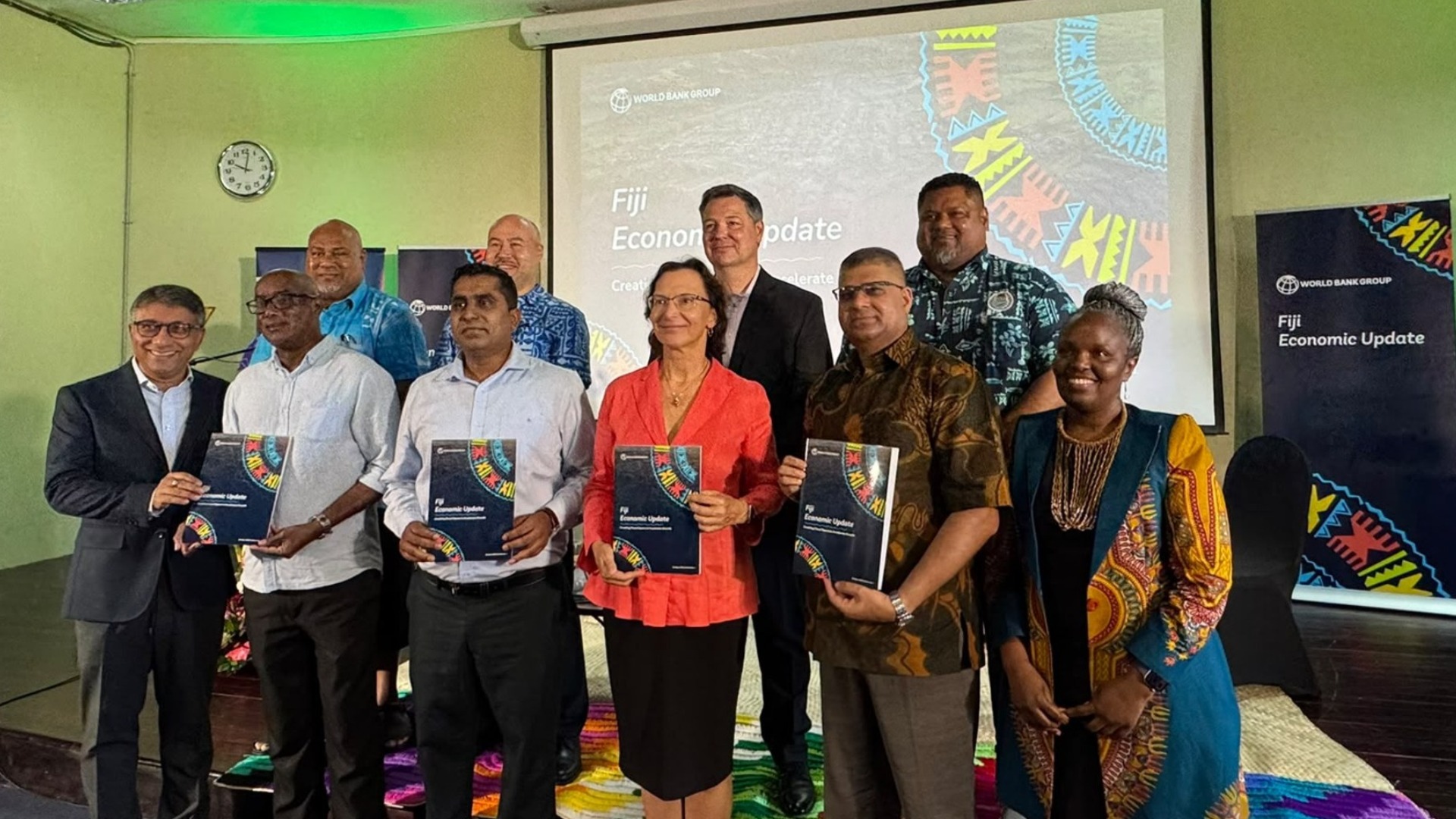
Goundar says the 2026 Fiji Economic Update has come at a critical time, providing an opportunity for policymakers, academics, the private sector and development partners to discuss the challenges and identify possible solutions.
He acknowledged Fiji's longstanding partnership with the World Bank, highlighting its support for infrastructure development, post-disaster rehabilitation and reconstruction, economic diversification, the health sector and economic reforms.
He says the World Bank had produced several technical reports over the years that had helped shape public policy discussions and debate in Fiji, including the 2023 Public Expenditure Review and the bank's recent climate report.
Goundar says it is important for Fiji to take the current challenges seriously and recognise that, although options were available, implementing solutions would not be easy.
He says that as a civil servant who is very much passionate about this country, he thinks it is time that we all get very serious and talk about these issues.
He says building consensus around the challenges facing the economy is critical to addressing them.