Predictive AI cannot determine an election outcome with 100 percent accuracy, but clean and accurate data can help provide probabilities that give decision-makers a better understanding of possible outcomes.
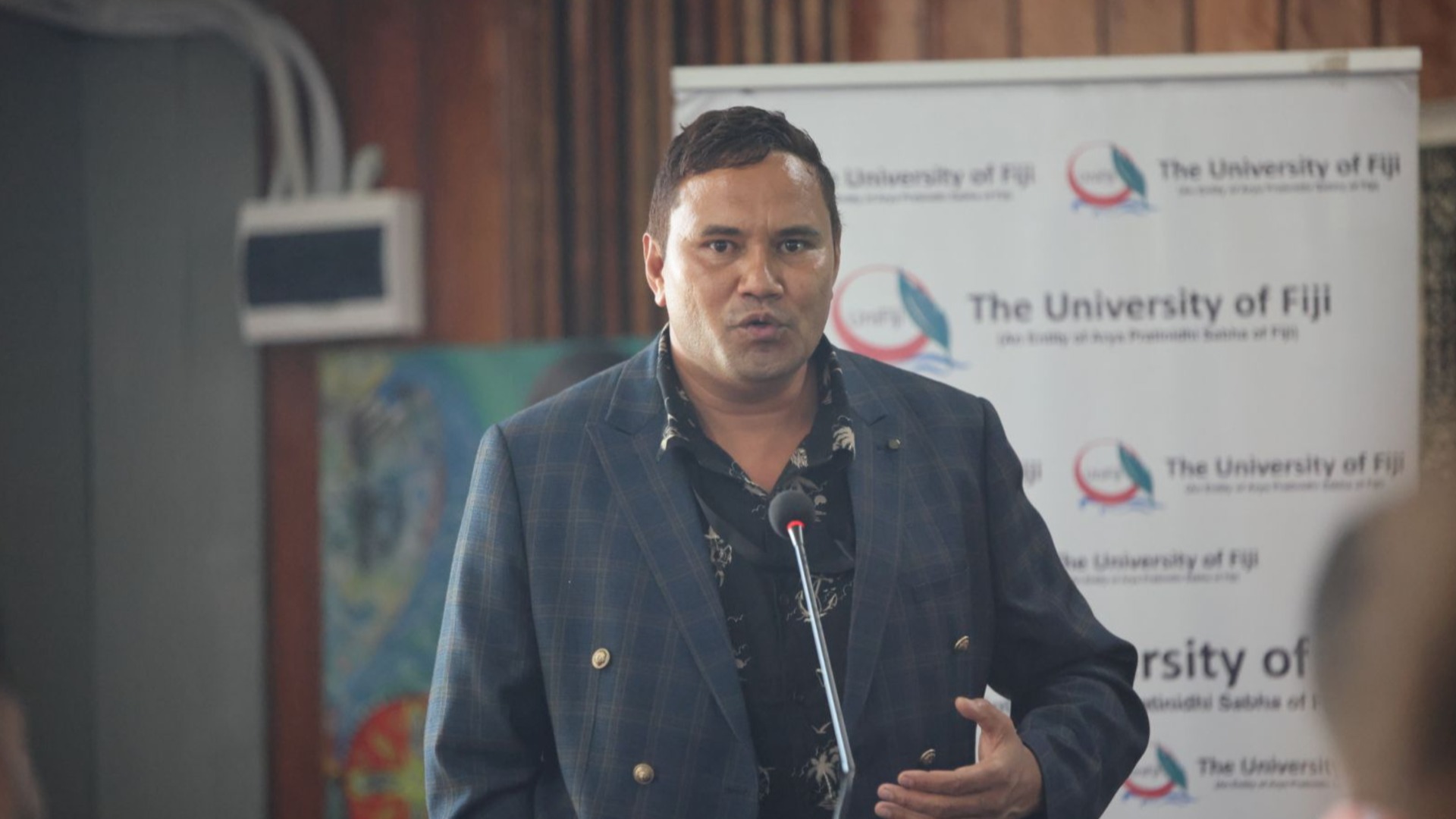
This follows a presentation by Data Analytics Specialist David Elbourne on the use of AI to predict general elections outcomes at the University of Fiji Press Club, which is led by students studying Journalism and Media at the University.
Elbourne mentioned this while responding to a question from University of Fiji first-year journalism student Tevita Naturaga on how successful predictive AI has been in developed countries.
Naturaga asked Elbourne about the success of predictive AI overseas, particularly in relation to his presentation on the use of artificial intelligence to predict election outcomes.
Elbourne says predictive modelling has never been 100 percent accurate and referred to his experience in Australia with economic modelling for drought and agriculture, including the impacts of El Niño and La Niña.
He says these models do not provide complete certainty, and the same applies to election modelling.
Insert: Elbourne on AI accuracy 10TH AUG 26
He says predictive modelling is therefore not about guaranteeing who will win an election but using available information to better understand possible outcomes and the uncertainty surrounding them.
Elbourne says the information generated through these models can help decision-makers make informed decisions while understanding that predictions will always carry a level of uncertainty.
Meanwhile Sereina Teilemb, a first-year University of Fiji student, asked what will be the most important role of a human journalist in the future when AI can analyse thousands of documents and predict trends much faster than a journalist.
Fiji Sun representative Inoke Rabonu responded that while AI will continue to evolve and become much faster at analysing information, the role of human journalists will remain important and relevant.
He says regardless of how advanced technology becomes, journalists will still be needed to verify information, ask questions, investigate further and check facts.
Rabonu says the human aspect of journalism will not change, even as AI becomes capable of completing tasks within seconds that previously took much longer.
His key message was that AI may make journalism faster, but it cannot replace the journalist’s responsibility to verify, question and investigate information.
