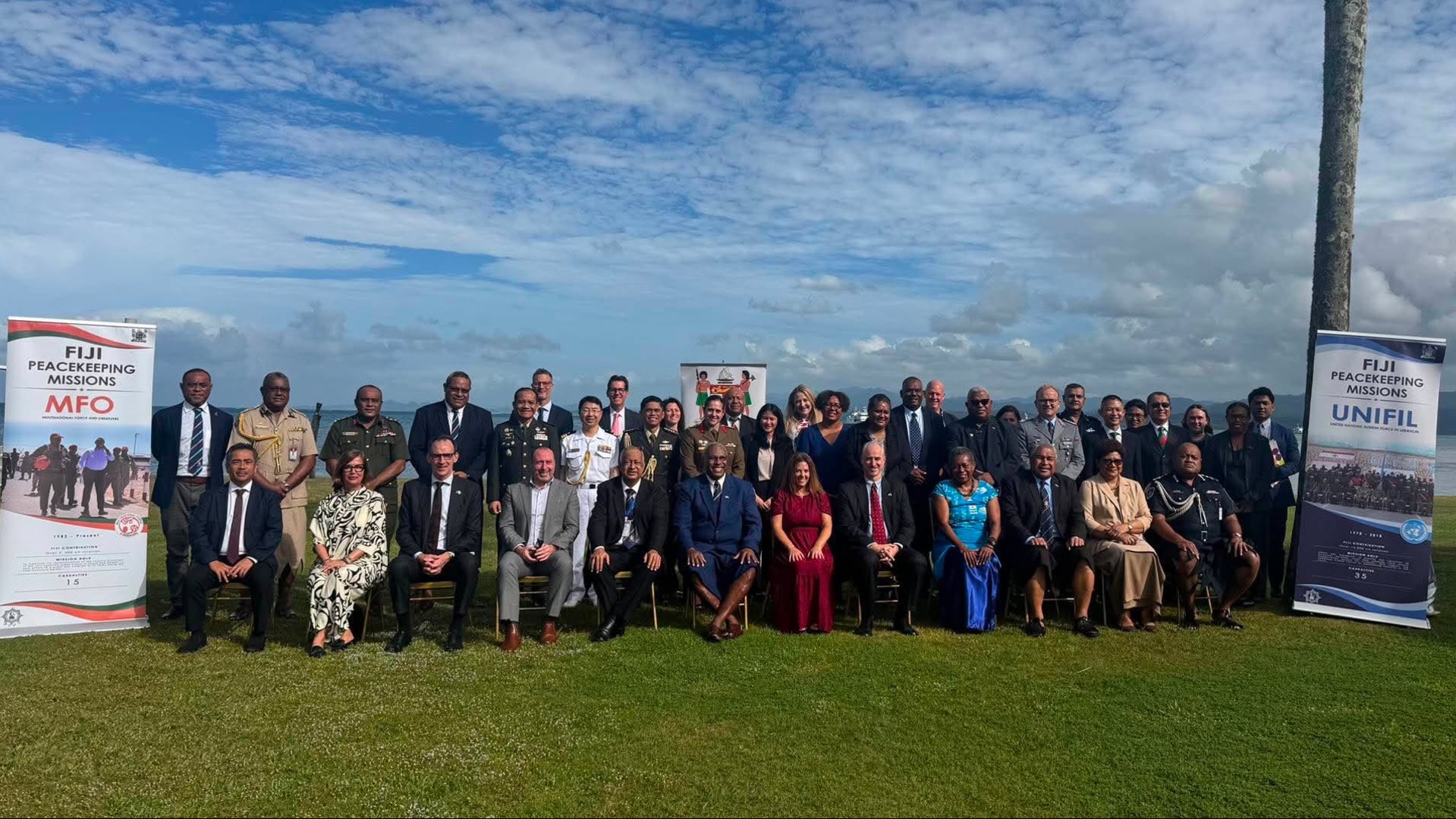
The conference, co-hosted by the Ministry of Defence and Veterans Affairs and the Stimson Center with support from the Australian Department of Defence and Global Affairs Canada, has brought together government representatives, United Nations officials, regional organisations, peacekeeping training centres and researchers to discuss the future of peacekeeping and the protection of civilians.
Turaga says today's peacekeepers face challenges that did not exist, when Fiji first deployed troops to Lebanon in 1978.
According to Turaga, peacekeepers now contend with misinformation, organised crime, armed drones, climate-related instability and increasingly complex conflicts while operating with tighter budgets and in more dangerous environments.
Despite these challenges, he says civilians continue to look to United Nations peacekeepers for protection, stability and hope.
Turaga says Fiji's contribution to United Nations peacekeeping spans more than five decades, with more than 15,000 Fijians serving in missions across the Middle East, Africa, Asia and other parts of the world.
He says more than 65 Fijians have lost their lives while serving on peacekeeping missions, and their sacrifice continues to inspire Fiji's commitment to global peace and security.
Turaga says Fiji remains committed to the vision of the Pacific as an Ocean of Peace, where dialogue, cooperation and mutual respect are used to resolve differences rather than conflict.
He also revealed that Fiji is developing its first National Peace Operations Strategy, to guide the country's future contributions to international peacekeeping.
Acting President and CEO of the Stimson Center Rachel Stohl says the world is at a critical point for peacekeeping as United Nations missions face funding shortages, growing political divisions and increasing security challenges.
She says while peacekeeping missions have fewer resources, the demand for them has not declined, with conflicts, displacement and humanitarian crises continuing to increase around the world.
Stohl says peacekeeping operations must continue to evolve, so they remain effective and able to respond to future challenges.
The conference continues over the next few days, with delegates discussing the future of peace operations, the protection of civilians and evolving security challenges across the Indo-Pacific region.