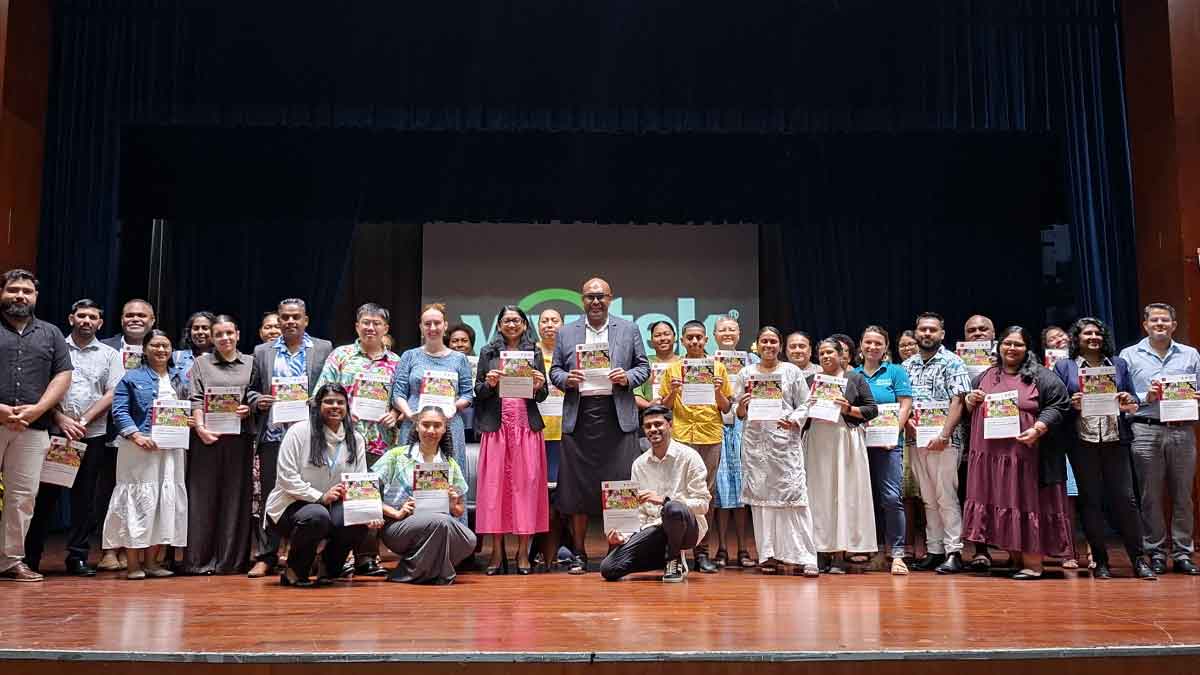
As getting children to make healthy food choices becomes increasingly challenging, Health Minister Dr Ratu Atonio Lalabalavu says Fiji’s new Home-Grown School Meals Policy Brief will help ensure children have better access to nutritious, locally grown food and would be of major assistance in Fiji’s fight against non-communicable diseases.
The policy brief comes as findings from Fiji’s 2025 World Health Organization STEPwise Survey (STEPS) show 98.5 percent of adults aged between 18 and 69 years have at least one non-communicable disease risk factor or condition.
The Ministry of Health continues to warn that non-communicable diseases remain Fiji’s most serious health challenge and continue to drive premature deaths, with the four major fatal NCDs - heart disease, diabetes, cancer and chronic respiratory illness, accounting for around 80 percent of all deaths in the country.
Speaking at the launch of the policy brief, Dr Lalabalavu says good nutrition during childhood lays the foundation for healthy growth, learning and development, and the onus is on parents and communities to create an environment that enables children to make healthy choices.
Dr Lalabalavu says he grew up at a time when his parents forced him to eat healthy foods, but getting children to do so has become increasingly challenging, and parents and communities need to show them that healthy eating will help build a healthy future.
He says children spend a significant part of their day at school, and schools therefore have an important role in shaping lifelong eating habits.
He says the Home-Grown School Meals approach presents an important opportunity by connecting schools more closely with local farmers and communities; this can improve children’s diets, encourage appreciation of local foods and support farmers in their food supply chain.
Dr Lalabalavu says Fiji has not started from zero, with schools and communities already supporting school gardening, nutrition education and meal programmes.
The Minister says no single model will suit every school, as the realities of schools in urban, rural and metropolitan communities differ, and Fiji’s national approach must be flexible enough to respond to these circumstances.
He says achieving this goal will require active collaboration amongst the Ministry of Health, Ministry of Education, Ministry of Agriculture and Waterways, together with parents, teachers, farmers, children’s societies, the private sector and development partners.
He says the policy brief provides a strong foundation for this work, but its true value will be determined by the practical and sustained action that follows.
He says Fiji is not reinventing something, but is strengthening or bringing back what it used to have before.
Meanwhile, Consumer Council of Fiji CEO Seema Shandil says today’s dialogue is all about putting children first and building healthier food environments through homegrown school meals.
Shandil says that as far as the Consumer Council is concerned, food choices are fundamentally a consumer issue; it is about people getting access to food that is safe, of good quality, nutritious and affordable.
She says what they have seen is that sometimes people end up making choices that are not healthy.
She says the Consumer Council is trying to engage schools, school heads, the Minister of Education and the Minister of Health to see how they can work together to ensure that some changes are brought about and behaviours are changed in children so that in future they can make healthy choices.
Shandil says children are not buying food and what they eat or consume is determined by someone else, with the question now being how children can be encouraged to make good choices, which includes ensuring that some changes are brought about in school canteens and in the way school meals are prepared and given to children.
She says it is very important for everyone to discuss the issue and not only discuss but take actions in ensuring that changes are brought about in how meals are prepared and provided to children.