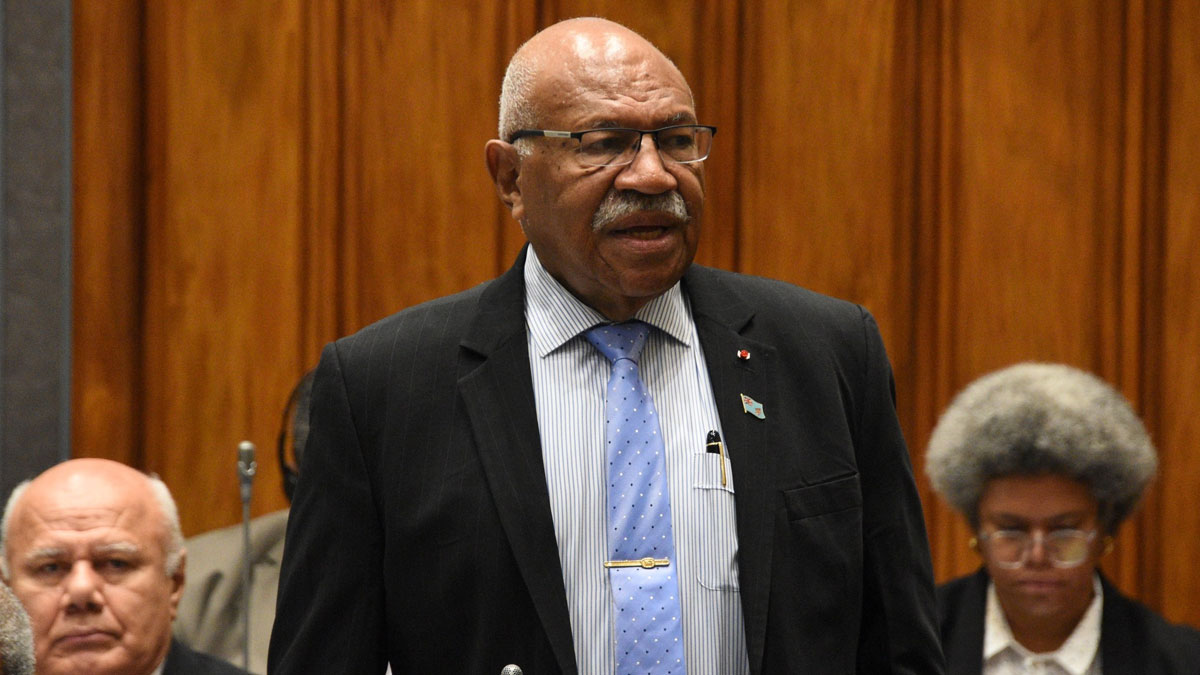
Prime Minister, Sitiveni Rabuka says Fiji takes another step in Fiji's constitutional journey today as the second reading on the Constitution Amendment Bill 2026 and debate continues in parliament this evening.
While speaking in parliament, Rabuka says the Supreme Court has confirmed that the constitutional amendments require the support of at least two-thirds of all Members of Parliament at the second and third readings, together with the approval by a majority of voters, voting in a referendum.
Rabuka says this is very important because the constitutional process does not belong to the Government alone, it involves Parliament and, ironically, quite contrary to what he thought almost 40 years ago, the Constitution must be changed in the hands of the people.
He adds if the constitutional requirements are met, the people of Fiji will ultimately have their say through a national referendum and will put into place the acts to facilitate that.
The Prime Minister says the Constitution is more than just a legal document.
He says it establishes how our country is governed, it sets out the powers and responsibilities of our institutions, it protects rights and freedoms, it provides checks and balances and it defines the relationship between the State and the people.
Rabuka says ultimately, the Constitution is about people, it's about our family, our community, our identity, our values, and our hope for the future.
If 66 percent of the MPs in parliament vote in support of the Bill, it will move forward to a process where a Joint Parliamentary Select Committee led by Prime Minister Rabuka, Deputy Prime Minister Viliame Gavoka, National Federation Party Leader and MP Professor Biman Prasad, Acting Attorney General Siromi Turaga, Minister for Lands Filimoni Vosarogo, Minister for Information Lynda Tabuya, Minister for Rural and Maritime Development Mosese Bulitavu, Leader of the Opposition Inia Seruiratu and 3 members of the Opposition nominated by the Opposition Leader will have consultations with the people of Fiji over the next 30 days.
The third reading of the Bill will then be held in parliament which has to take place after 30 days.
If the 66 percent is not achieved, the process comes to an end.
If the 66 percent vote is achieved in the third reading after a successful 66 percent in the second reading, the Fijian Elections Office would then have to conduct a referendum, and the Constitution will only be amended after the approval by a majority of voters, voting in that referendum.
The referendum period will be between 30 and 45 days after the writ is issued by the President to allow time for voter education, overseas voting arrangements and electoral preparations.
Voters will be able to tick, cross or circle either Yes or No on the ballot paper, and multiple referendum questions may be included on a single ballot paper.
The Supervisor of Elections will prepare national referendum results, which will be endorsed by the Electoral Commission before it is sent to the President for the final declaration.
Debate continues on the Constitution Amendment Bill in parliament.
Click here for full Constitution Amendment Bill coverage:https://www.fijivillage.com/indepth/2026-constitution-amendment-bill-tabled-in-parliament-9d3431/
