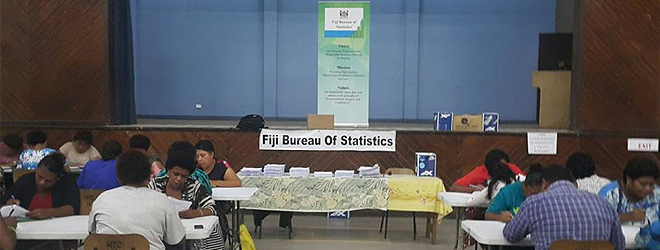
The Bureau of Statistics is currently conducting a pilot census that would be a critical part of the census planning process.
Government Statistician Epeli Waqavonovono says the program will provide the opportunity to test all aspects of the census programme before the main Census activities, thus ensuring the smooth operation and success of the census.
Waqavonovono says the upcoming census will be digital and they have selected some of the very remote areas of the country for the pilot census.
He adds that the most challenging for a data collection mode is to test the census methodology, the questionnaires, data collection methods, the training programme for field staff, data editing and processing.
Waqavonovono says critical issues and problems encountered during the Pilot Census will provide valuable lessons for them and which must be addressed in advance of the start of the main census.
September 17th is Census night and the data collection period will be from 18th September to the 8th of October.
The 2017 census is funded by the $7.8 million budget allocation with the technical support from the Pacific Community (SPC), the Australian Bureau of Statistics, the World Bank and the United Nations Population Fund.
The Population and Housing Census aims to gather information on Age, Sex, Marital Status, Religion, Family Structure, Education, Disability, Employment and Unemployment, Types of Economic Activities, Toilet Facilities, Water and Electricity supplies.