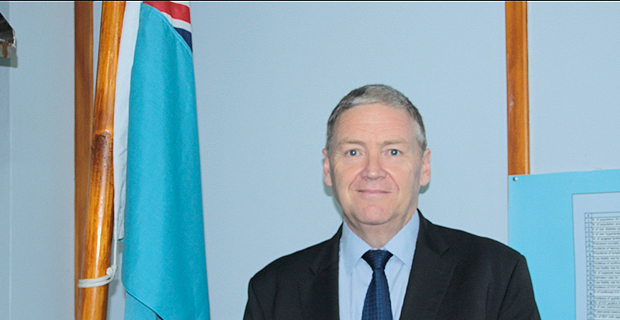
The Ministry of Health has assigned a senior officer to work full time as a liaison between the Fiji Pharmaceutical and Biomedical Services and the Neonatal Intensive Care Unit at CWM Hospital, to ensure that there are no bottlenecks or unnecessary delays in obtaining medical supplies and equipment.
This has been revealed by the Permanent Secretary Phillip Davis who says that this officer will be responsible for purchasing and distribution of supplies.
Davis made this appointment after the findings from the World Health Organisation was clear in its conclusion that there were some systemic infrastructure issues which contributed to the outbreak of the acinetobacter baumanii bacterium.
The Ministry earlier stated that the six babies that died at the unit from pre-existing, life threatening conditions, including perinatal asphyxia, pneumonia and severe prematurity had contracted the acinetobacter baumanii bacterium this year.
The Permanent Secretary says the WHO report had highlighted that there is inadequacy in the provision of some items that are needed for effective control of infections in the hospital setting.
He says these includes single-use respiratory equipment that is needed to help very sick babies breathe, protective clothing that ensures staff do not carry bacteria from one patient to another, supplies and equipment needed to help with regular and thorough hand washing among staff and visitors.
Davis says their systems and processes for purchasing and distribution of medicine and equipment were inadequate and have been for several years.
He says the report notes that similar criticisms of inadequate provision of supplies and equipment have been made by people who have investigated previous outbreaks over the past ten years.
The Permanent Secretary says this year’s outbreak is, sadly, another consequence of those inadequacies.
Davis says the report also highlighted weaknesses in implementing infection prevention and control practices, inconsistencies in cleaning and poor handling of intravenous fluids which are areas that we will address.
He says when the review team discussed their findings, they commented on the fact that staff were generally well aware of the importance of infection prevention and control.
He says they knew what they should be doing but the fact they did not have access to the supplies and equipment they needed, meant they had become accustomed to making do, and often they were unable to do what they needed to do.
Davis says the results of the evaluation are set out in the report and they clearly show that, while each hospital has some areas of relative strength, there is scope for improvement across the board.
He says the staff from the Ministry met with the team and were briefed on some of their initial findings and on the basis of those discussions, took some immediate actions.
The Permanent Secretary says arrangements were made to purchase some essential items for use in the Neonatal Intensive Care Unit at CWM and those were delivered within 24 hours of the initial briefing.
He says further purchases are also now being made.
Davis says a detailed action plan for priority interventions was agreed and Medical Superintendents were tasked with reporting back on a regular basis.
He says a report was also provided on actions to be taken to date which includes a submission to the Fiji Pharmaceutical and Biomedical Services for a comprehensive list of supplies and equipment needed to improve infection control.
Davis says the development of revised standard operating procedures for cleaning of ICUs and equipment was also made together with the arrangements for widespread distribution and use of hand sanitiser gel.
He says plans for additional refresher training on hand hygiene for all staff and measures to improve safe use of intravenous fluids is also part of the plan
Davis says a senior member of nursing staff was assigned to work with the team in the Neonatal Intensive Care Unit to review and improve their infection prevention and control practices and the response was that staff in the unit are now wholeheartedly committed to following best practice.