Farmers are being urged to adopt climate-resilient tomato cultivation practices as Fiji faces prolonged dry spells and worsening drought conditions driven by the 2026 El Niño event.
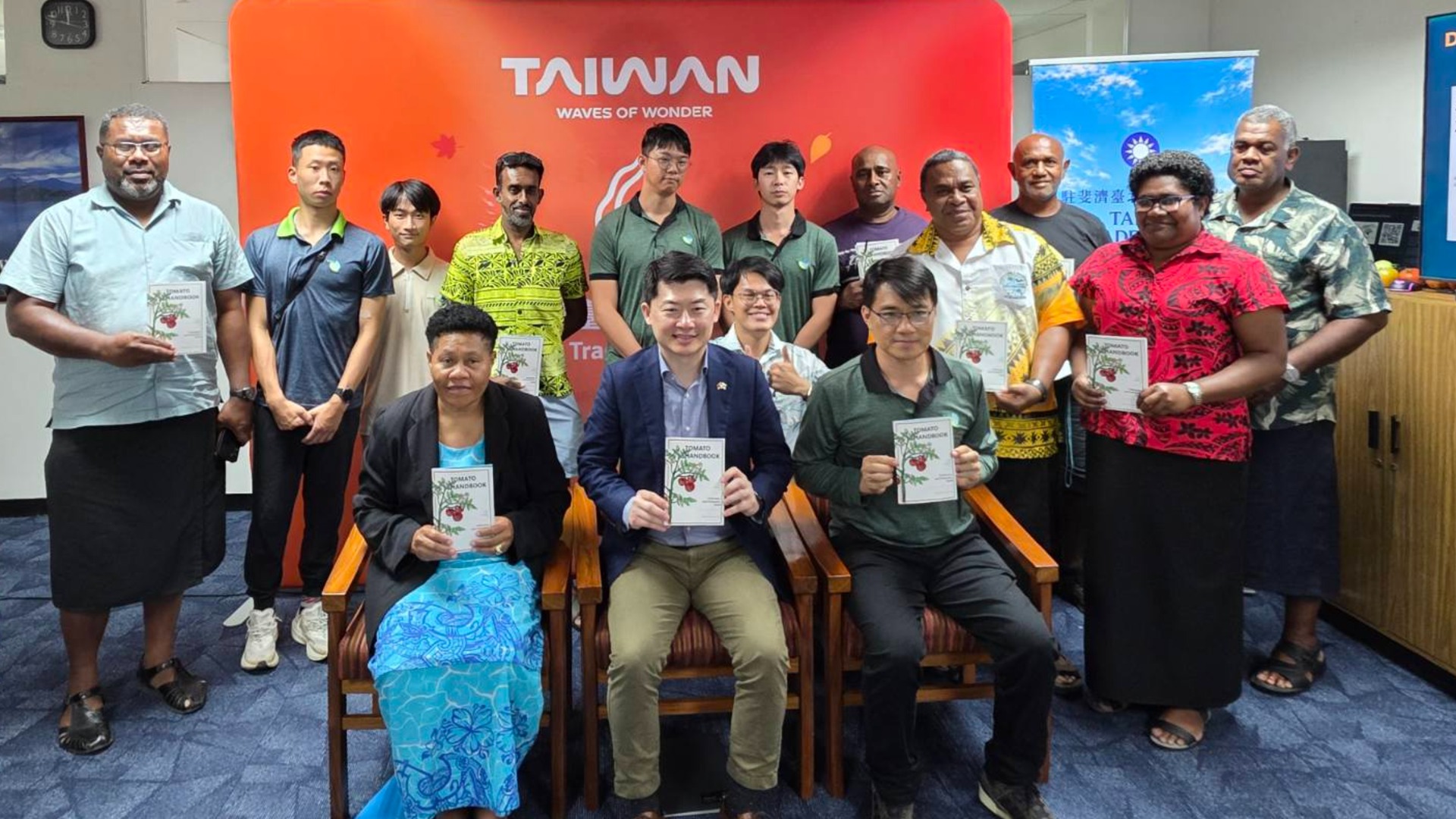
This comes as the Taipei Trade Office in Fiji officially launched the Tomato Resilient Cultivation Handbook today, providing practical guidance to help farmers manage water resources, improve production practices and minimise the impact of climate-related challenges.
Taipei Trade Office Representative in Fiji David Cheng Wei Wu says the handbook comes at a critical time, following the Prime Minister's declaration of a State of National Disaster for drought across Fiji on 18 November.
Cheng says the handbook is not simply a theoretical publication but a practical field guide developed alongside extension officers and growers and tailored to Fiji's local conditions.
He says the initiative aligns with the Government's El Niño response efforts, particularly climate-resilient planting and smart irrigation solutions.
The handbook also aligns with the Government's El Niño response initiatives aimed at protecting farmers' livelihoods and national food security, with the first initiative already launched by the Minister for Agriculture, Waterways and Sugar Industry.
Cheng says their Technical Mission also operate two demonstration farms in Fiji, in Nausori and Sigatoka, which serve as active centres for farmer training and technology demonstrations.
He says the initiative also aims to build local technical capacity, help stabilise farm incomes and ensure fresh produce continues to reach local markets.
Ministry of Agriculture Director of Crop Development and Extension Services Kasanita Ratu says tomatoes are an important vegetable crop in Fiji, contributing to household food security, farmers' incomes and the supply of fresh produce to local markets.
However, she says farmers continue to face challenges from climate change, irregular rainfall, drought conditions, pest and disease outbreaks and increasing production costs.
Ratu says the handbook provides practical technical knowledge to help farmers adopt improved production practices, manage resources efficiently and strengthen their resilience to climate-related challenges.
She says the Ministry wants every farmer in Fiji to have access to the handbook and will distribute it through its extensive network of offices around the country.
Ratu says farmers without internet access will also be provided with physical copies to ensure rural communities are not left behind.
She says farmers will also have access to the cabbage handbook, which was printed and made available to farmers last year.
She says the success of the tomato handbook will ultimately be measured by improvements in tomato production, product quality, farm productivity and farmers' livelihoods.
Responding to questions on how the handbook will support farmers affected by El Niño, particularly in the Western Division, Ratu says farmers are being encouraged to make use of the publication to have some control over the impact of the climate event.
Cheng says the handbook was developed before the severe impacts of El Niño and focuses on saving energy and water, as well as introducing smart solutions for farm management.
He says Taiwan has maintained technical missions in Fiji since 1978 and remains open to discussing further ways to support the Fijian Government and its people in addressing climate change and resilience challenges.
Ratu also acknowledged Taiwan's continued support through its Technical Mission and International Cooperation and Development Fund, saying the partnership is important in strengthening Fiji's agricultural sector.