The proposed Constitution (Amendment) Bill must deliver stronger democracy, protect human rights, ensure accountability and safeguard the interests of ordinary Fijians, rather than benefit those holding political power.
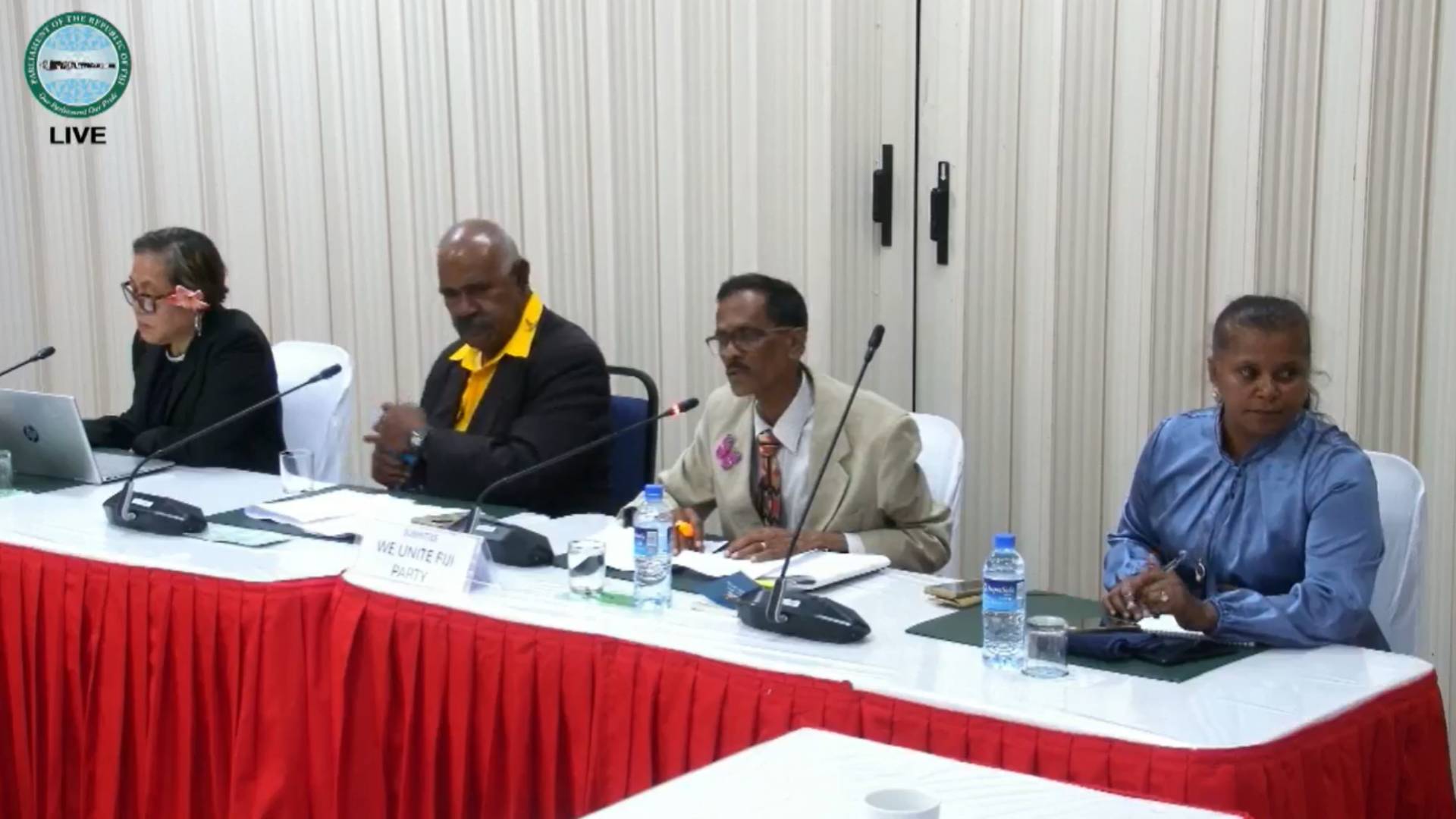
This was the message from the We Unite Fiji Party during their submission before the Parliamentary Special Committee on the Constitution (Amendment) Bill, where the party raised concerns over several provisions and called for greater clarity, legal safeguards and public consultation before the Bill is adopted.
Party Leader Ruveni Nadalo says Fiji needs a constitutional reform that strengthens equal citizenship, protects customary land and culture, and makes every public institution accountable to the people.
Nadalo acknowledged that the Bill contains worthwhile objectives but says it is not ready for adoption in its present form.
He says Fiji had gone through four constitutions since independence in 1970 - in 1970, 1990, 1997 and 2013, and stresses the importance of ensuring the country does not continue experiencing constitutional changes without addressing the underlying issues.
Nadalo is urging Fijians, regardless of ethnicity, religion, political affiliation or social background, to consider five key questions when assessing the proposed reforms.
These include whether the new arrangements will give ordinary citizens a stronger voice in decisions affecting their future, ensure political leaders and public officials are accountable, support economic development, guarantee equal treatment and protect the interests of future generations.
He says constitutional reform should improve the everyday lives of ordinary Fijians, ensure the law applies fairly regardless of a person's position, wealth or political influence, and strengthen the independence and resources of public institutions.
Party General Secretary Satish Kumar raised concerns about the legality of the amendment process, particularly the change from the three-quarter majority requirement under the 2013 Constitution to a two-thirds majority following a Supreme Court decision.
Kumar says the party wants greater clarity on the legal basis of the amendment process, stressing that Parliament exercises legislative authority while the Supreme Court operates under the Constitution.
He says the party's concerns also extends to provisions relating to immunity, warning that some existing protections are not clearly preserved in the proposed Bill.
Kumar questioned the relationship between provisions retaining parts of the existing constitutional arrangements and those repealing the 2013 Promulgation Decree.
He says this raises questions about whether protected provisions are being repealed or reduced, and recommends that a reasoned legal assessment be published, alongside clear provisions outlining which protections will remain.
The party also raised concerns about the proposed immunity arrangements, particularly the possibility of immunity extending across future governments.
Kumar says the Bill should establish an explicit historical cut-off and make clear that the new Constitution would not create additional immunity for conduct beyond that date.
On future constitutional amendments, the party expressed concern that the proposed framework will allow Parliament to make changes through parliamentary supermajorities without a referendum.
Kumar says fundamental changes affecting citizens' rights, electoral equality, constitutional supremacy and judicial independence should require direct approval from the people.
The party further raised concerns about the relationship between the proposed Constitution's founding references to Christianity and family values and its provisions prohibiting the State from favouring any religious or non-religious belief.
They recommend that religious neutrality be expressly affirmed, with protections for the freedom to believe, change one's religion or hold no religious belief.
On the Bill of Rights, Kumar says the general test for limiting rights should apply consistently across all provisions, with any restrictions required to meet the principles of legality, necessity and proportionality.
He also called for clearer provisions allowing representatives, groups and public interest organisations to bring constitutional cases, alongside accessible court procedures, cost protection and practical access to legal aid.
The submission also questioned the proposed administrative justice provisions, including the exclusion of registered companies and the delayed commencement of certain protections.
Kumar says constitutional administrative justice protections should apply from the commencement of the Constitution and should be based on the exercise of public power or a public function, rather than the legal status of an organisation.
On detention, the party raised concerns about provisions allowing detention on grounds including vagrancy, addiction or suspected unsound mind, saying these should be subject to clear requirements of necessity, proportionality and regular judicial review.
They also recommend removing status-based detention linked to poverty or vagrancy and ensuring prompt access to the courts for people detained under any category.
The party is also calling for the removal of the provision allowing lawful and moderate chastisement of children, arguing that it could undermine protections against violence and harmful practices.
Kumar says the Constitution should protect children from all forms of corporal punishment and support positive discipline and appropriate child protection measures.
On freedom of expression, the party warns that restrictions relating to attacks on the dignity of respected offices or institutions, public morality and hate speech can potentially discourage criticism, journalism, academic debate and satire.
They recommend clearer definitions of prohibited incitement and stronger protection for public interest criticism and peaceful advocacy.
The submission also highlighted concerns over customary land and marine rights, particularly the need for a clear framework to resolve overlapping claims involving customary owners, State leases, existing permits, public infrastructure and customary access.
Kumar says the Bill should provide transparent processes for mapping, claims and adjudication, while protecting fair compensation and access to judicial review where rights are affected.
The party also called for stronger constitutional provisions addressing climate change, disaster displacement and planned relocation, including consultation, replacement tenure and protection of livelihoods for displaced communities.
On the proposed governance arrangements, the party raised concerns about the independence of constitutional commissions, appointments to senior judicial positions and the composition of the Constitutional Offices Commission.
Kumar says the proposed commission structure gives government-aligned members a majority, potentially weakening independent oversight of appointments involving institutions such as the Electoral Commission, Auditor-General and Police.
He recommends replacing the political majority with independent members selected through a transparent, multi-party process.
The party also called for stronger safeguards around political financing, campaign expenditure and the misuse of State resources, as well as constitutional guarantees for regular local government elections.
Concerns were also raised about the Prime Minister's power to determine the size of Cabinet, with Kumar saying the proposed arrangements should include a reasonable limit to prevent excessive government spending at the expense of essential public services.
He says Cabinet size should reflect the country's population and financial capacity, particularly given the need to maintain public service delivery, infrastructure, health and education.
The party further recommends stronger independence in senior judicial appointments, clearer safeguards against political interference in police investigations and disciplinary matters, and a functioning independent mechanism to investigate corruption.
In her closing remarks, party president Litiana Saviki says the Constitution must protect the rights of all Fijians, including workers, farmers, business owners, teachers, students, unemployed young people, senior citizens and rural and maritime communities.
Saviki says constitutional reform should be judged by whether it benefits the people of Fiji, rather than which political party stands to gain from it.
She has called on the committee to publish a corrected consolidated version of the Bill, a transparent electoral and implementation plan, and a response to public submissions.
Saviki also stressed that fundamental changes to the Constitution in the future should continue to require the approval of the people.
