Sport has an important role to play in challenging gender stereotypes and changing attitudes that contribute to violence against women.
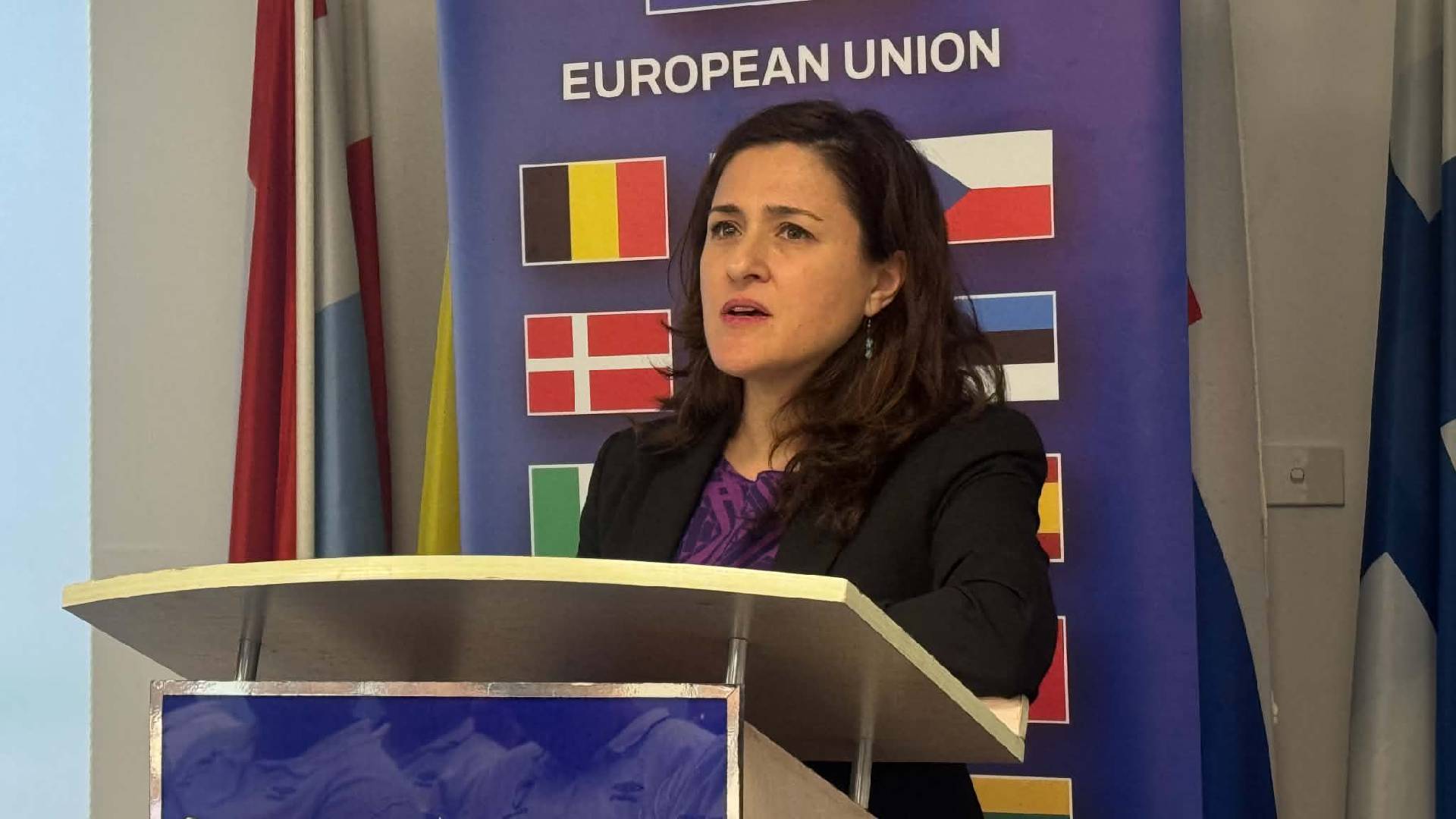
This has been highlighted by UN Women Representative Alison Davidian during the launch of the 16 Days of Activism Against Gender-Based Violence Campaign at Tappoo City Complex in Suva.
Davidian says women breaking barriers in traditionally male-dominated sports such as rugby can change how society views women's abilities and what young girls believe they can achieve.
She says the documentary Breaking Ground, which features Fijiana Drua players and other women in rugby that launched today, highlights how sport can be used to challenge assumptions about women's roles and inspire the next generation.
Davidian says bringing the documentary back on the first day of the campaign is particularly meaningful, as violence against women is often sustained by attitudes and beliefs that society has come to accept as normal.
She says children grow up absorbing messages about how girls and boys should behave, their roles in society and how power should be understood.
Davidian says while there has been progress in addressing violence against women, more work is needed to change the attitudes that allow it to happen.
She refers to the latest study on violence against women in Fiji, launched by the Fiji Women's Crisis Centre last week, which found that the proportion of women who have experienced partner violence had decreased from 64 percent to 48 percent over the past 15 years.
However, she says the findings remain concerning, with almost one in two women having experienced violence from an intimate partner and almost six in 10 women experiencing emotional abuse.
Davidian says efforts to strengthen laws and policies, support survivors and assist organisations working to end violence must continue, alongside initiatives that challenge harmful gender attitudes.
She highlights the Get Into Rugby Plus programme, which uses rugby activities to teach children about power, respect and accountability.
She says the programme encourages children to reflect on how power is used, what respect means and how to handle disagreements.
Davidian also highlights changes observed in Samoa, where a survey found that 70 percent of boys initially believed sexual harassment could be the girl's fault. By the end of the programme, none of the boys surveyed held that belief.
She says the programme has also helped women coaches gain confidence in leading boys' teams, while male coaches have reported greater patience and less aggression when working with children.
However, Davidian stresses that sport must also be a safe environment for women and girls, acknowledging that discrimination and harassment can still occur.
She says Fiji Rugby adopted three policies last year covering safeguarding, workplace harassment and gender-based violence.
The 16 Days of Activism Against Gender-Based Violence Campaign is organised by the Delegation of the European Union to the Pacific to commemorate the International Day for the Elimination of Violence Against Women.