The Pacific can now approach climate negotiations from a stronger position by demanding climate action as a legal obligation rather than simply asking for assistance.
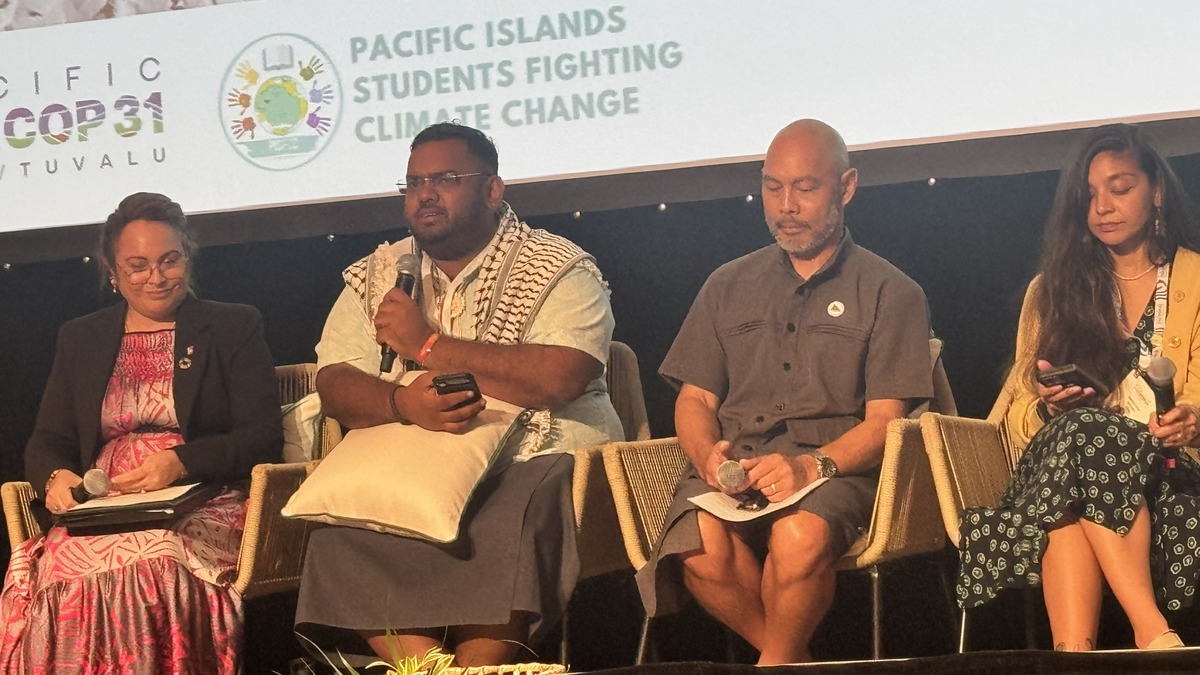
This has been highlighted by Pacific Islands Students Fighting Climate Change Engagement and Outreach Lead Abdul Mufeez Shaheed during a panel discussion on the sidelines of the Pacific Pre-COP31 in Nadi.
Shaheed says the International Court of Justice advisory opinion has given the Pacific greater legal clarity and a stronger position in climate negotiations.
He says they go into COP, they go into negotiations with a much stronger position, where they no longer talk about losing their home if nothing happens but can now say that they are required by law to do this.
Shaheed says climate change is not simply a political issue for Pacific communities, but an issue affecting human rights, livelihoods, culture, homes and future generations.
He says the ICJ has clarified that states have a duty to prevent significant harm to the climate system and that where states fail to act, there must be a remedy.
Shaheed says the next step is to ensure climate harm experienced by communities is properly documented.
He says the impacts of climate change are often felt most by women, girls, young people and marginalised communities, and these experiences need to form part of how climate harm is assessed.
He stresses our stories are not decorations for a panel but are evidence.
Shaheed says every nationally determined contribution, national adaptation plan and climate law in the Pacific should be tested against the ICJ advisory opinion.
He says young people should be involved as co-authors in developing these policies rather than being brought in only for consultation.
Shaheed says the focus must now be on ensuring the legal clarity provided by the ICJ reaches communities.