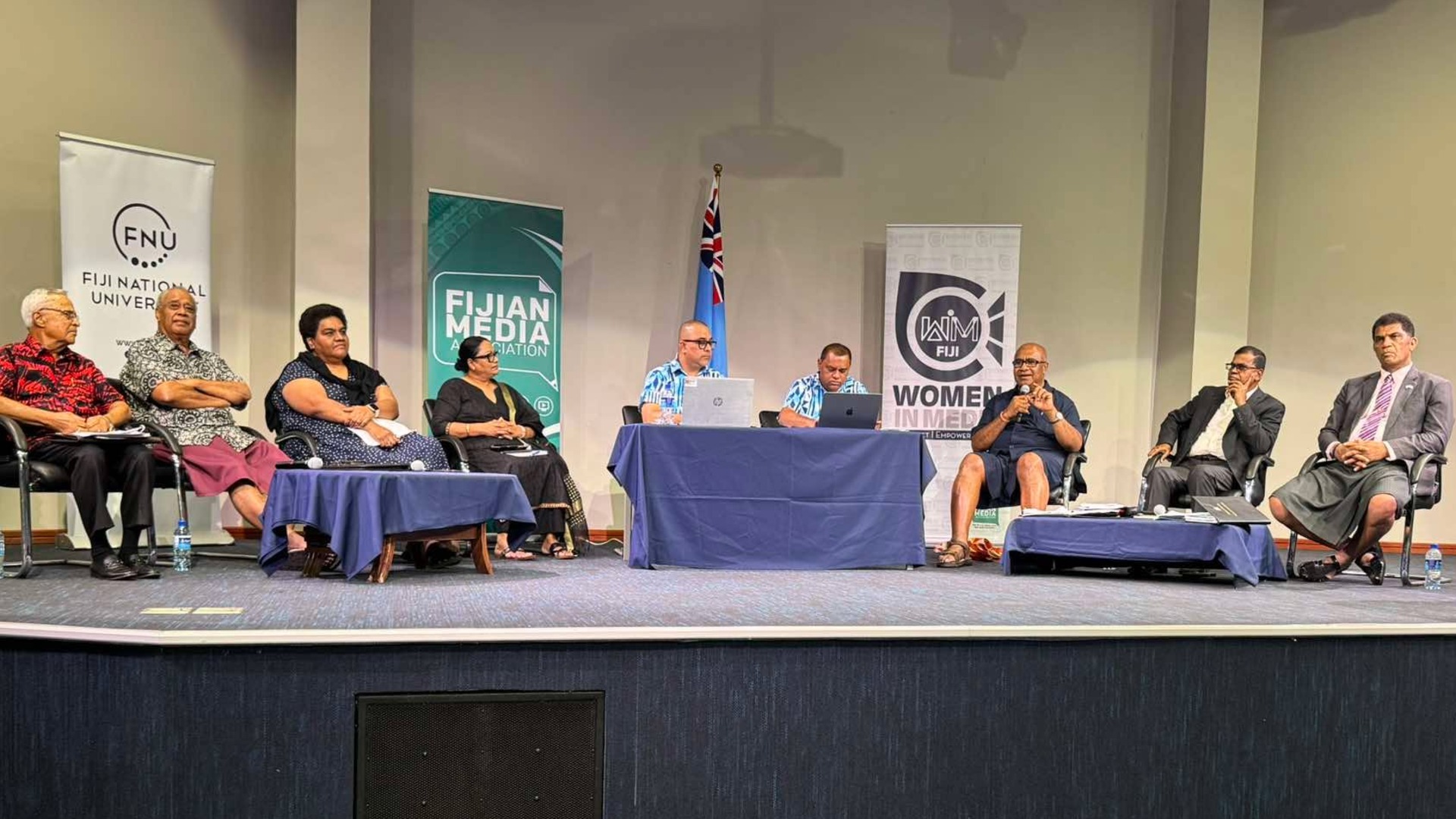
One Nation President Roko Tupou Draunidalo has expressed the party's views on the Bose Levu Vakaturaga (BLV), describing it as a British colonial construct and questioning what it has done to address issues such as drugs, HIV and poverty.
During the Fijian Media Association’s Town Hall Forum on the Constitution Amendment Bill at the Fiji National University in Nasinu, fijivillage News Director Vijay Narayan asked Draunidalo whether she supports the BLV being included in the proposed system.
Draunidalo says she supports the chiefly system, which she believes will remain for generations, but says the chiefs need to serve their people on the ground.
INSERT: Draunidalo on BLV 29th Oct
Draunidalo says the BLV already exists under the law and One Nation will have to discuss whether it should continue in its current form.
She says the BLV has made no difference to anyone's lives, adding that while it has been harmless, it has also been harmful in the past.
She says they also oppose establishing a Senate, describing it as a waste of money and saying the funds could instead be used to address water supply problems at CWM Hospital and in the Western Division, where some communities are also facing water and power shortages.
Draunidalo also questions the proposed constitutional changes, saying the draft does not include a referendum provision that would give people a direct say.
She says constitutions should not be changed easily, pointing to Australia and the United States, where only a small number of proposed constitutional changes have been approved over many years.
Narayan also questioned National Federation Party Leader and former Finance Minister Professor Biman Prasad about the likely cost of a 23-member Senate and whether Fiji could sustain the additional expenditure, particularly given the World Bank’s warning that the country’s fiscal space is narrowing.
Professor Prasad says Fiji’s debt-to-GDP ratio was reduced from more than 90 percent to 79 percent by July 2026, but global pressures and future borrowing are expected to push the ratio higher.
He says the cost of a Senate may be small compared with the country’s overall debt, but every additional expense contributes to the bigger picture.
When Narayan asked whether Professor Prasad supports a Senate, he says his party does not support one and did not propose a Senate in its submission to the Constitution Review Commission.
Fiji Labour Party Leader and former Prime Minister Mahendra Chaudhry says Fiji does not need a Senate, arguing that it would transfer power from the people to the elite.
Chaudhry says Fiji is a small country with a population of less than one million and questions whether a Senate would add value to Parliament.
He also raises concerns about transitional provisions in the proposed Constitution Amendment Bill, saying they could allow the current Parliament to continue without an election under the proposed changes.
He further questions the proposed electoral provisions, describing them as manipulative and alleges that the changes are designed to preserve power.
Opposition MP Premila Kumar also questions whether Fiji can afford an additional 23-member Senate, along with its leadership, staff and committees.
Kumar says Government expenditure is around 82 percent of its revenue, leaving limited funds for capital works, and questions why taxpayers should face additional costs when some communities still lack reliable access to water and electricity.
Unity Fiji Leader Savenaca Narube, on the other hand, supports restoring the Senate, saying it could provide checks on Parliament and allow issues to be reviewed through public consultation.
Narube says the benefits would outweigh the costs, although he disagrees with the proposed method of appointing senators and believes they could be elected or appointed differently to ensure greater independence.
SODELPA Leader and Education Minister Aseri Radrodro says his party also supports establishing a Senate, saying they made a submission in favour of its establishment.
Radrodro says currently, there is no Senate system and we see the impact of this in terms of lawmaking.
He highlighted the importance of a Senate in promoting good governance and accountability, improving lawmaking, and involving the Great Council of Chiefs and other communities who call Fiji home.
Meanwhile, Deputy Prime Minister Manoa Kamikamica also defended the proposed Senate, saying it is part of the 75 percent of the Constitutional Review Commission’s recommendations that the Government has agreed to.
He says the commission recommended a Senate because it heard that this was a major issue for the people of Fiji.
Kamikamica says the discussion about cost misses the wider purpose of the proposal.
INSERT: Kamikamica on senate PN 29th Oct
He says Fiji had a Senate under the 1970, 1990 and 1997 Constitutions because there was a belief that the voice of chiefs needed to be heard in the governing system.
Kamikamica also highlighted what he described as a Plan B for future constitutional changes through the Referendum Act, allowing the Government to seek the people's views through public votes on issues that could potentially be included in the Constitution.
He says if the people agree to the proposed changes, these could then be incorporated into the Constitution.
However, when asked whether the referendum provision was included in the proposed Constitution Amendment Bill, Kamikamica confirmed that it was not.
He says it is a possible pathway for future governments to use if changes to the Constitution were needed.
