Women must have equal opportunities to lead in Parliament, corporate boardrooms and senior management, with transparent selection processes, practical support and accountability needed to address their under-representation.
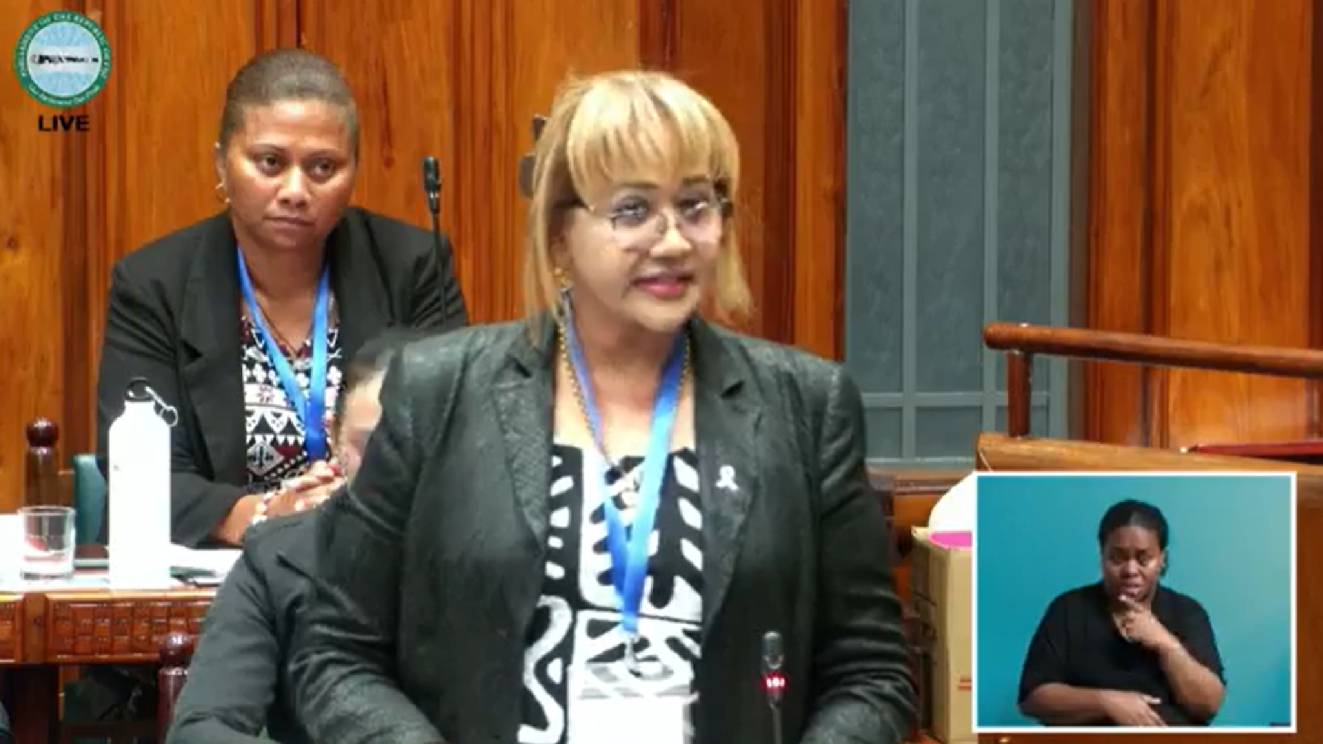
This has been highlighted by Annie Rogers, who took on the role of Prime Minister and Minister for Civil Service and Strategic Planning, National Development and Statistics, and Public Enterprise during the Fiji Women's Practice Parliament session this morning.
Rogers pointed to the current composition of Fiji's Parliament, which has 50 men and five women, questioning whether leadership opportunities were being distributed fairly between men and women.
She says the figures raised serious questions about the recognition of women's ability, intelligence and leadership potential.
Rogers says Fiji can not afford to waste talent by holding capable women back from leadership positions.
She stresses that women are citizens who deserve representation, not merely voters whose support was sought during elections.
Rogers say women's experiences can strengthen decision-making across all areas, including the economy, infrastructure, national security, climate resilience, public finance and health.
She also called for greater transparency in appointments to corporate boards and chief executive positions, saying qualified women should not be overlooked because leadership continued to be viewed as a male role.
Rogers describes women's representation in leadership as an economic, governance and democratic issue.
She proposed four commitments to improve women's access to leadership.
These include establishing transparent pathways into leadership, providing practical support such as mentoring and leadership development, introducing published targets and regular reporting on women's representation, and giving serious consideration to temporary special measures through consultation and a lawful process.
Rogers says political parties, companies and public institutions must actively seek qualified women and examine how candidates were selected, supported and promoted.
She also highlighted the need for campaign resources and arrangements that recognise caring responsibilities, stressing that men must share those responsibilities.
On accountability, Rogers proposed regular reporting on women's representation in public appointments, boards and senior management, while encouraging businesses and political parties to adopt similar measures.
Addressing concerns about merit, she says men did not have a monopoly on merit and should therefore not have a monopoly on opportunity.
Rogers says the way women are treated in leadership positions also shaped how the next generation viewed equality.
She is urging Parliament to ensure girls could see leadership as a responsibility they could aspire to and realistically attain, while boys learned that women should be treated as equals.