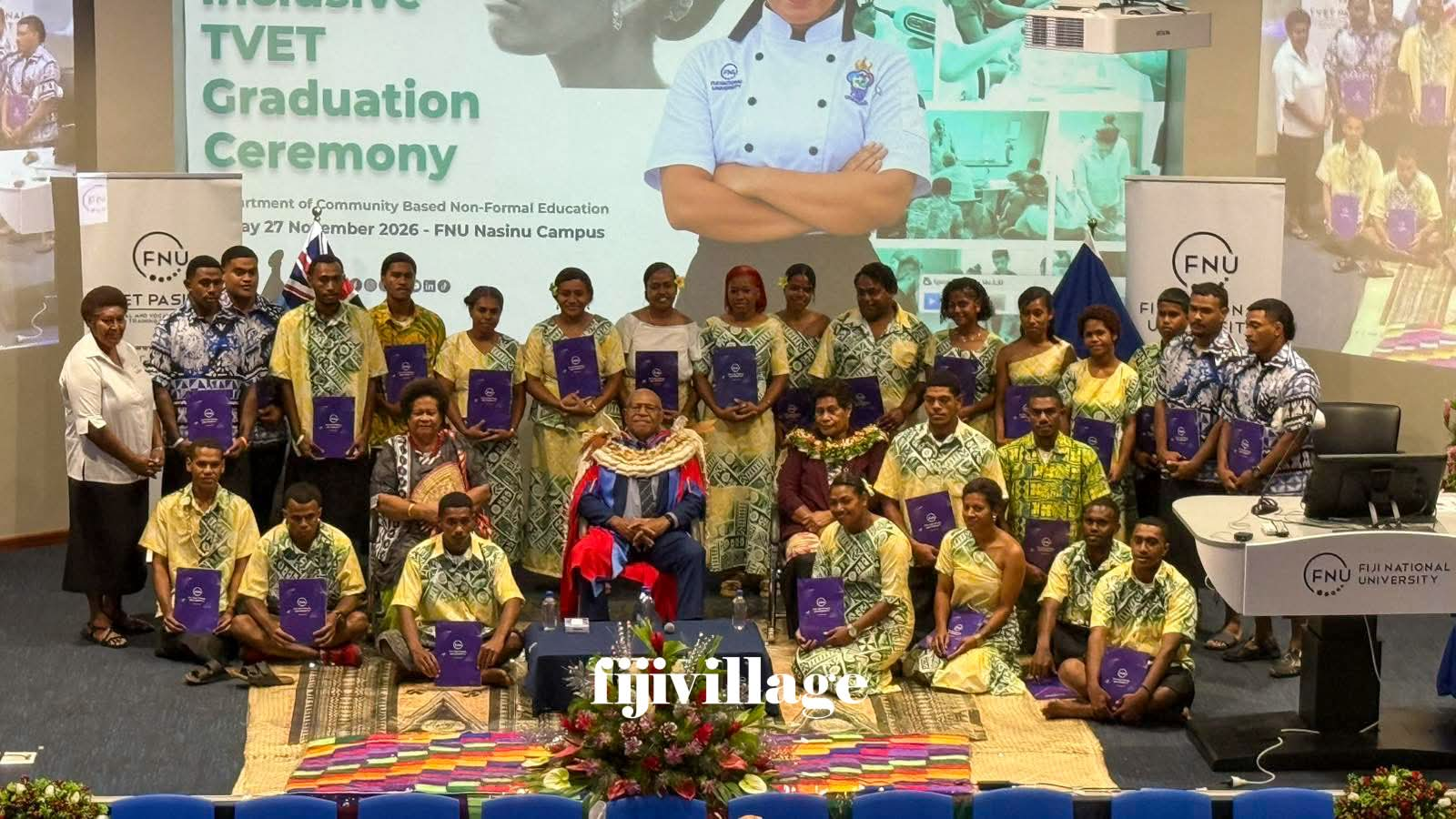
The graduates include 398 males and 287 females who received certificates after successfully completing their training.
The graduation at FNU's Nasinu Campus, brought together participants from the Lami-Suva-Nasinu informal settlements, as well as people who travelled from Tailevu, Naitasiri and Navua.
Around 80 percent of the graduates had left school early but have now returned to learning, gained practical skills and earned certificates that could help them create better opportunities for themselves and their families.
The programme has also brought together people from different generations, with the youngest graduate aged 16 and the oldest 75, highlighting that education and skills training can be pursued at any stage of life.
One of the graduates, Raijeli Otikece Waqainabete Levaci, who completed a Block Laying course, says the training came with challenges, particularly the shortage of resources and building materials.
She says finding suitable places to carry out practical training was also difficult, and students had to make use of the limited materials available to them.
However, she acknowledges the support of her parents, family, friends and fellow students, saying their encouragement helped her and the group reach the completion of the course.
Levaci says she felt proud to complete the training and described the achievement as a team effort.
She is encouraging young people not to give up on education or their ambitions, saying they should take things one day and one step at a time while remaining focused on their goals.
After completing the course, she is now applying to universities locally and overseas, with hopes of gaining entry into a university in Australia.
She also hopes to pursue her ambition of becoming a celebrity.
The Inclusive TVET Programme highlights the importance of making education and practical skills training accessible to everyone, regardless of age or background.
Today's graduation recognises the determination of those who have returned to learning, developed new skills and taken steps towards improving their livelihoods and creating better opportunities for their families.