Gender-based violence and disability-based violence need greater attention, as the experiences of women and girls with disabilities are not adequately discussed in communities and by organisations.
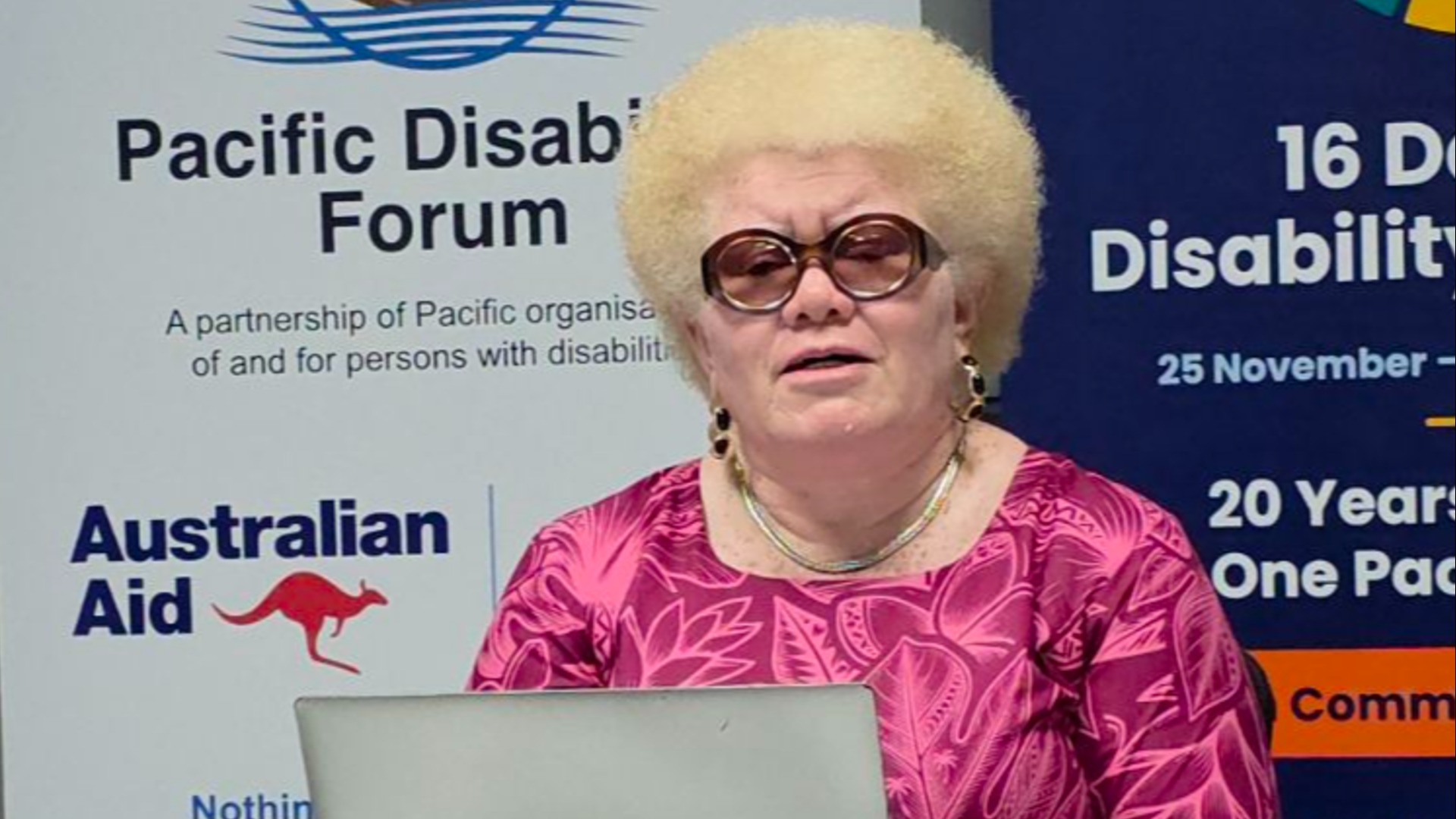
This has been highlighted by Pacific Disability Forum Chief Executive Officer Sainimili Tawake, who says women and girls with disabilities face forms of violence that are often overlooked, including abuse involving the deliberate removal or withholding of assistive devices they depend on for everyday activities.
Speaking at the launch of the 16 Days of Regional Disability Activism, Tawake says one of the key objectives is to encourage organisations of persons with disabilities to start conversations about gender-based violence and disability-based violence.
She explains disability-based violence can include deliberately placing a wheelchair where its user cannot access it, putting essential household items beyond a person's reach or taking away their glasses.
Tawake says these actions can affect a person's independence and ability to carry out everyday activities, yet they are not always recognised as violence.
She says the initiative was piloted last year and is being continued across the 16 days because December 3rd, the International Day of Persons with Disabilities, is not enough to address the wide range of issues affecting persons with disabilities.
Tawake says disability is a cross-cutting issue that must be considered in health, education, sexual and reproductive health, accessibility and social protection.
She says this also means recognising persons with disabilities in discussions around HIV, particularly as Fiji faces an increase in HIV cases.
Tawake says persons with disabilities who acquire HIV are often not identified in wider statistics, partly because the appropriate tools to identify them are not being used.
On gender-based violence, Tawake says a separate study focusing on women and girls with disabilities is needed to establish more accurate evidence of the violence they experience.
She acknowledges the work of women's and feminist organisations, including the Fiji Women's Crisis Centre, for making efforts to include women with disabilities in their programmes.
Tawake says violence against persons with disabilities can also happen during emergencies, in homes, communities, schools and even polling stations.
She says women with disabilities in rural communities may face additional difficulties when reporting violence, particularly when they are advised to resolve matters within their families.
To address this, Pacific Disability Forum will launch a toolkit on the elimination of violence, building on work that began around 2013 and 2014.
Tawake says the toolkit will be shared across the Pacific, with plans to have it translated into different languages, as was done with the previous toolkit.
Tawake stresses that referral pathways and services must also be accessible, including ensuring police officers are trained to receive reports from women with disabilities.
She says disability organisations cannot address these challenges alone and must work alongside women's organisations, communities and governments.
She says the current water shortages also highlight accessibility challenges, as people with mobility impairments may struggle to travel along inaccessible paths to collect water.
Tawake says these situations further exclude persons with disabilities and can worsen the challenges they already face.
She says 13 organisations of persons with disabilities have been involved in discussions and are working with women's organisations and governments to amplify messages around disability inclusion during the 16 days of activism.
Tawake says the Pacific has made progress through disability policies, legislation, social protection programmes and education initiatives, but there is still considerable work to be done
The 16 days of activism starts tomorrow.