Prime Minister Sitiveni Rabuka has revealed that the Fiji Government spent $141,849.20 on his seven official overseas visits, stressing that Fijians have every right to know how taxpayers' money is spent.
Rabuka says he submitted details of his overseas visits during the recent Parliamentary sitting, including the purpose of each trip, Government expenditure and costs covered by host countries and sponsoring organisations.
The Prime Minister says some of the costs, including airfare, accommodation and meals, were covered by host governments and sponsoring organisations.
He explains that meals and incidental expenses cover necessary daily costs associated with official travel, including local transport and transfers, and depend on the duration of each visit.
Responding to criticism over excessive overseas travel, Rabuka says while technology and virtual meetings are important, face-to-face engagement remains necessary for Fiji to strengthen international partnerships and protect its national interests.
He says Fiji is a small island nation with limited economic and bargaining power, and its leaders must be present when important decisions affecting the country's economy, oceans, climate and trade are being made.
Rabuka says it is easy for political party leaders to criticise overseas travel and promise to reduce it, but representing Fiji internationally is part of the responsibility of being Prime Minister.
He stresses that every dollar spent belongs to taxpayers and welcomes public scrutiny of Government expenditure.
Rabuka says he will continue making information available to ensure Fijians understand how public funds are spent and why decisions are made on their behalf.
The visit to Australia was undertaken as part of the renewed and elevated Vuvale Partnership. The Fiji Government spent $3,970.01, while the Australian Government covered the accommodation and airfare.
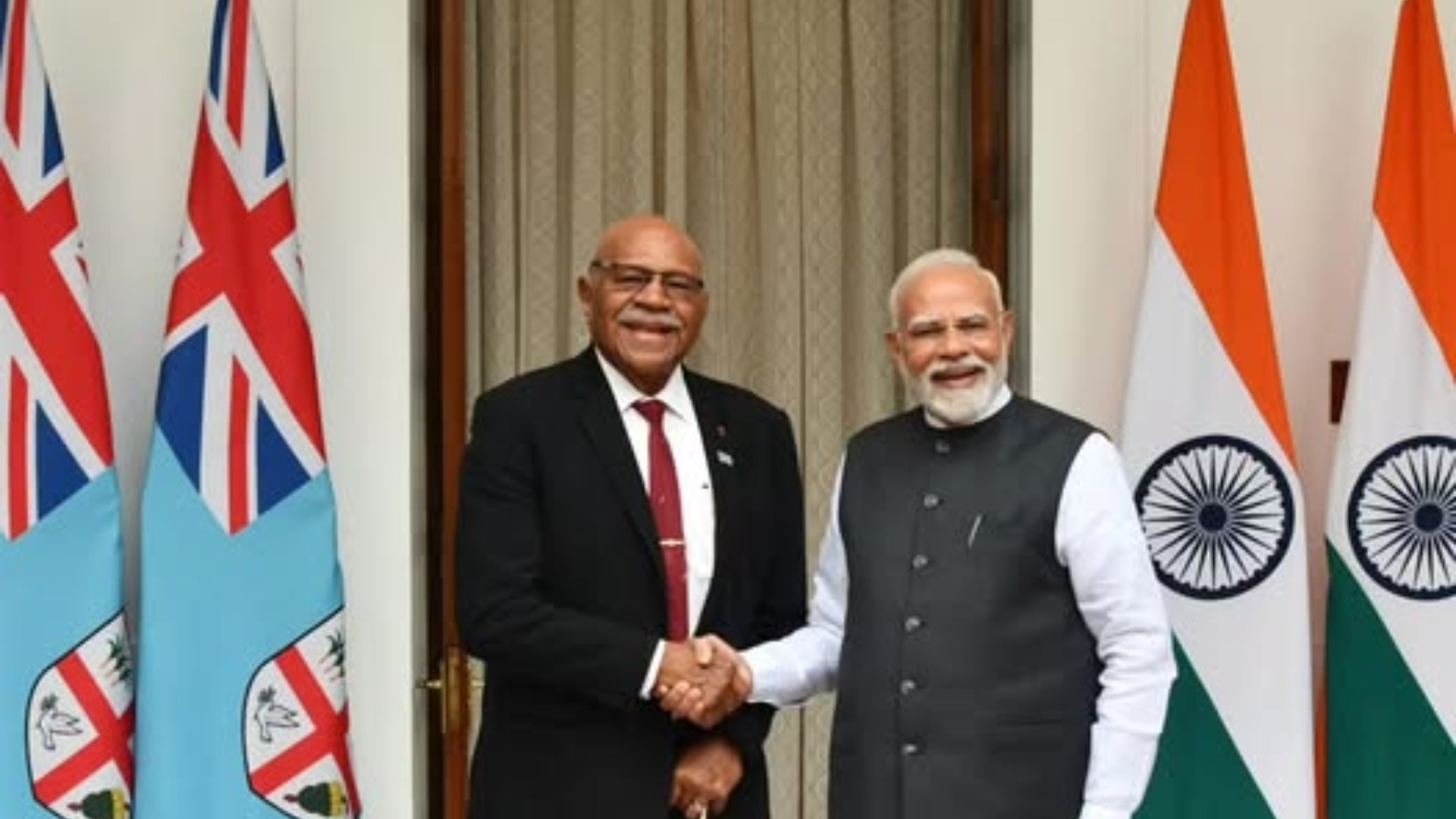
The visit to India was undertaken at the invitation of Indian Prime Minister Narendra Modi to strengthen the longstanding friendship and cooperation between Fiji and India. The Fiji Government spent $2,671.03 on meals and incidental expenses, $1,777 on airfare and $3,259.52 on accommodation, bringing the total expenditure to $7,707.55. The Indian Government covered accommodation in India and airfare.
The visit to Solomon Islands was for participation in the 54th Pacific Islands Forum Leaders Meeting. The Fiji Government spent $3,265.05 on meals and incidental expenses and $13,034 on airfare, bringing the total expenditure to $16,299.05. The Government of Solomon Islands covered the accommodation.
The visit to Israel and the United States involved the official opening of the Embassy in Israel and participation in the United Nations General Assembly. The Fiji Government spent $8,906.34 on meals and incidental expenses, $28,861 on accommodation and $49,891 on airfare, bringing the total expenditure to $87,658.34. There was no contribution from the host country or any sponsor.
The visit to Australia was to officiate at Fiji Day celebrations. The Fiji Government spent $1,029.51 on meals and incidental expenses, $848.30 on accommodation and $6,703.03 on airfare, bringing the total expenditure to $8,580.84. The Multicultural Association of Asia Pacific Inc. NSW partially funded the accommodation, with the Fiji Government meeting the remaining costs.
The visit to Japan aimed to strengthen Fiji-Japan relations and culminated in the signing of the Lomavata Kizuna Partnership Agreement. The Fiji Government spent $1,478.47 on incidental expenses and $15,291.06 on accommodation, bringing the total expenditure to $16,769.53. The Government of Japan covered meals and airfare.
The visit to Papua New Guinea was for participation in the Melanesian Ocean Summit. The Fiji Government spent $863.88 on meals and incidental expenses, while the Government of Papua New Guinea covered the airfare and accommodation.