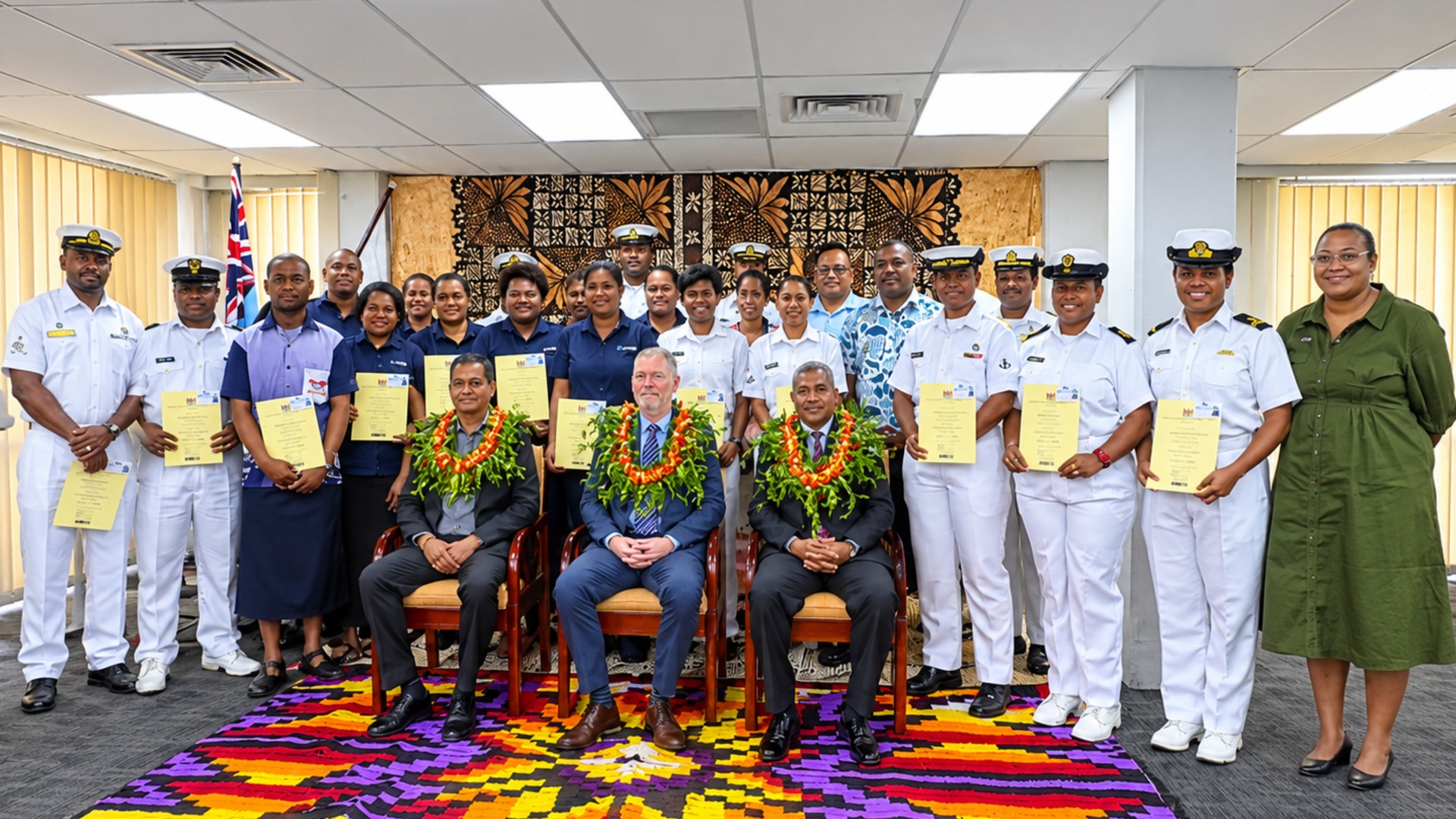
A total of 40 participants, including 20 women and 20 men, have graduated from the 125th Boatmaster Licence Course, marking the highest female participation recorded under the programme and highlighting growing opportunities for women in Fiji's maritime industry.
The graduation ceremony was held today at Fiji Ports in Walu Bay, Suva, recognising participants who successfully completed the training.
The graduates represent various organisations and agencies, including the Fiji Navy, iTaukei Women Conservation, Republic of Fiji Military Forces, Neptune Pacific Direct Line, TotalEnergies, Fiji Ships and F.S. Industries Limited.
The programme is supported through the United Kingdom-funded Maritime Safety and Security Project, in partnership with the United Nations Development Programme, the British High Commission and Fiji Ports.
According to UNDP, women make up more than 50 percent of this graduating cohort, marking the highest female participation recorded under the programme so far.
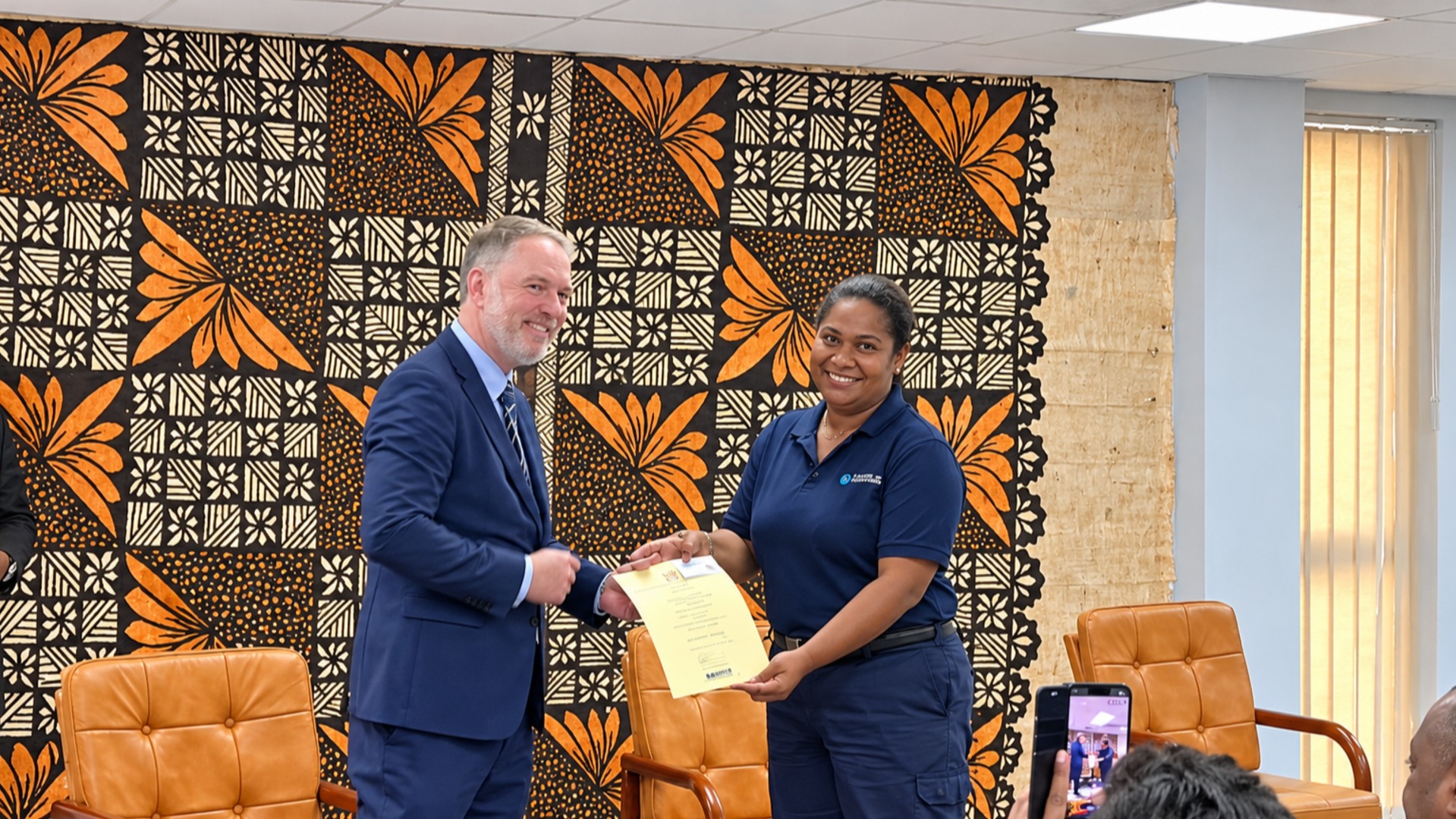
One of the graduates, 31-year-old Folauhola Manuqalo, who works as a Customs Officer with the Fiji Revenue and Customs Service's Border Division in Suva, says the licence will improve her ability to safely operate and navigate boats during border patrols and other maritime operations.
Manuqalo says although working in a physically demanding environment alongside male colleagues presented some challenges, maritime operations were not new to her as her work already involves boat searches and border patrols at sea.
She encourages more women to challenge the belief that maritime work is only for men, saying women are equally capable of taking up these responsibilities.
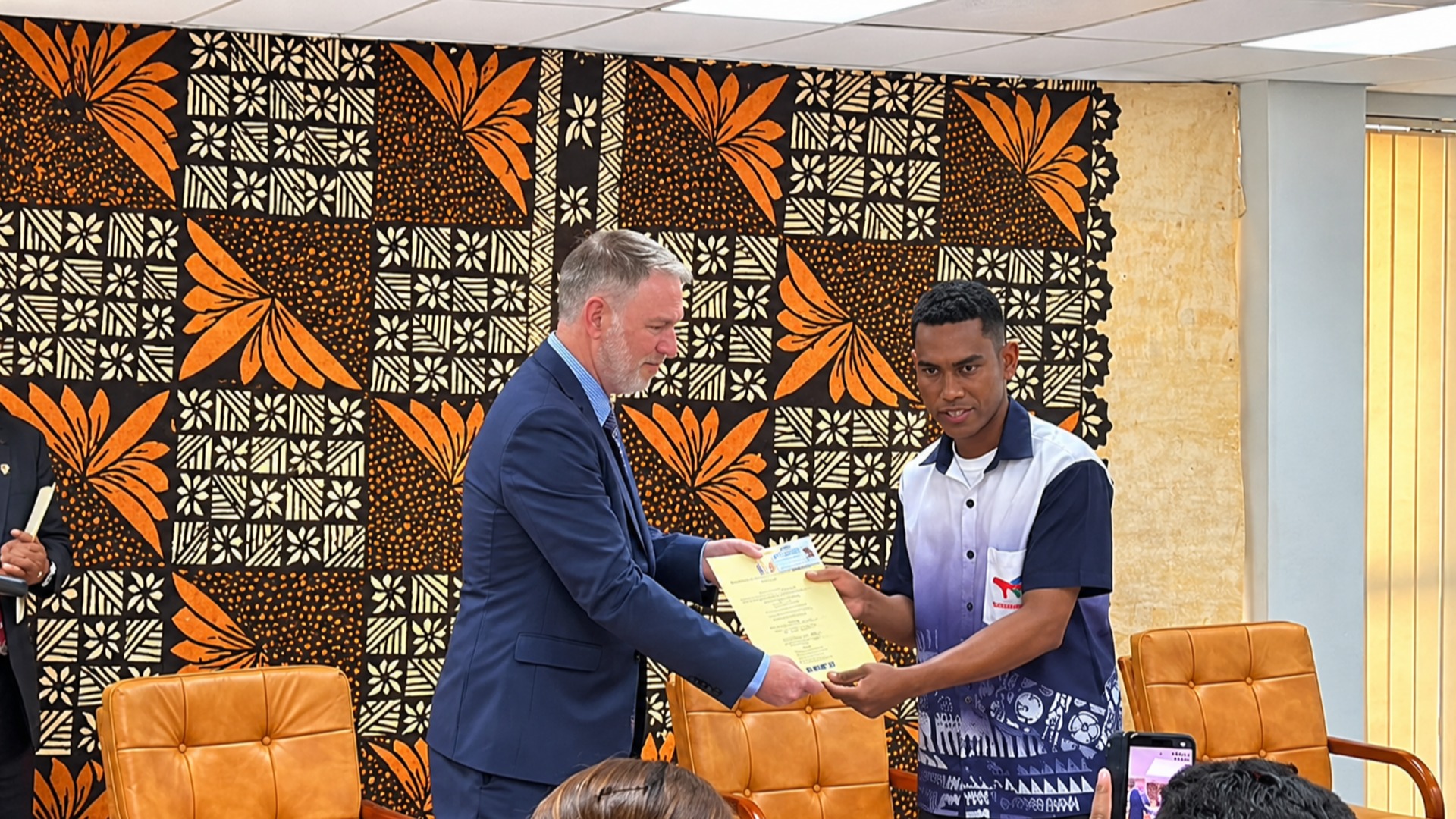
Another graduate, Matai Tikomailodoni of TotalEnergies, says teamwork was one of the biggest lessons from the training.
Tikomailodoni, who is originally from Numbalawu in Lau and has maternal links to Kadavu, says participants faced challenges during practical exercises at sea, but supported one another throughout the course.
The 25-year-old says teamwork is particularly important when dealing with rough seas and other difficult conditions, as the safety of everyone on board depends on working together.
Tikomailodoni is encouraging more women to take up Boatmaster Licence training, saying women should also have the opportunity to operate and captain boats.
He says the qualification will also be useful in their communities, particularly when operating fibreglass boats and other vessels.
Through the United Kingdom-funded project, more than 100 officials from the Fiji Navy, Fiji Police Force, Fiji Revenue and Customs Service and other maritime agencies have been supported to obtain their Boatmaster Licences.
The project has also facilitated training and certification for more than 1,000 participants across Fiji's coastal and remote island communities.
A project team is currently conducting maritime training in Lakeba, Lau, where more than 50 participants are expected to receive maritime licences after successfully completing their training.
The United Kingdom's support also complements assistance from Australia, Japan and the United States in providing maritime vessels, rigid-hulled inflatable boats and other equipment to Fiji.
The programme aims to strengthen maritime security, improve safety and build the skills needed by officials and coastal communities to carry out maritime operations.